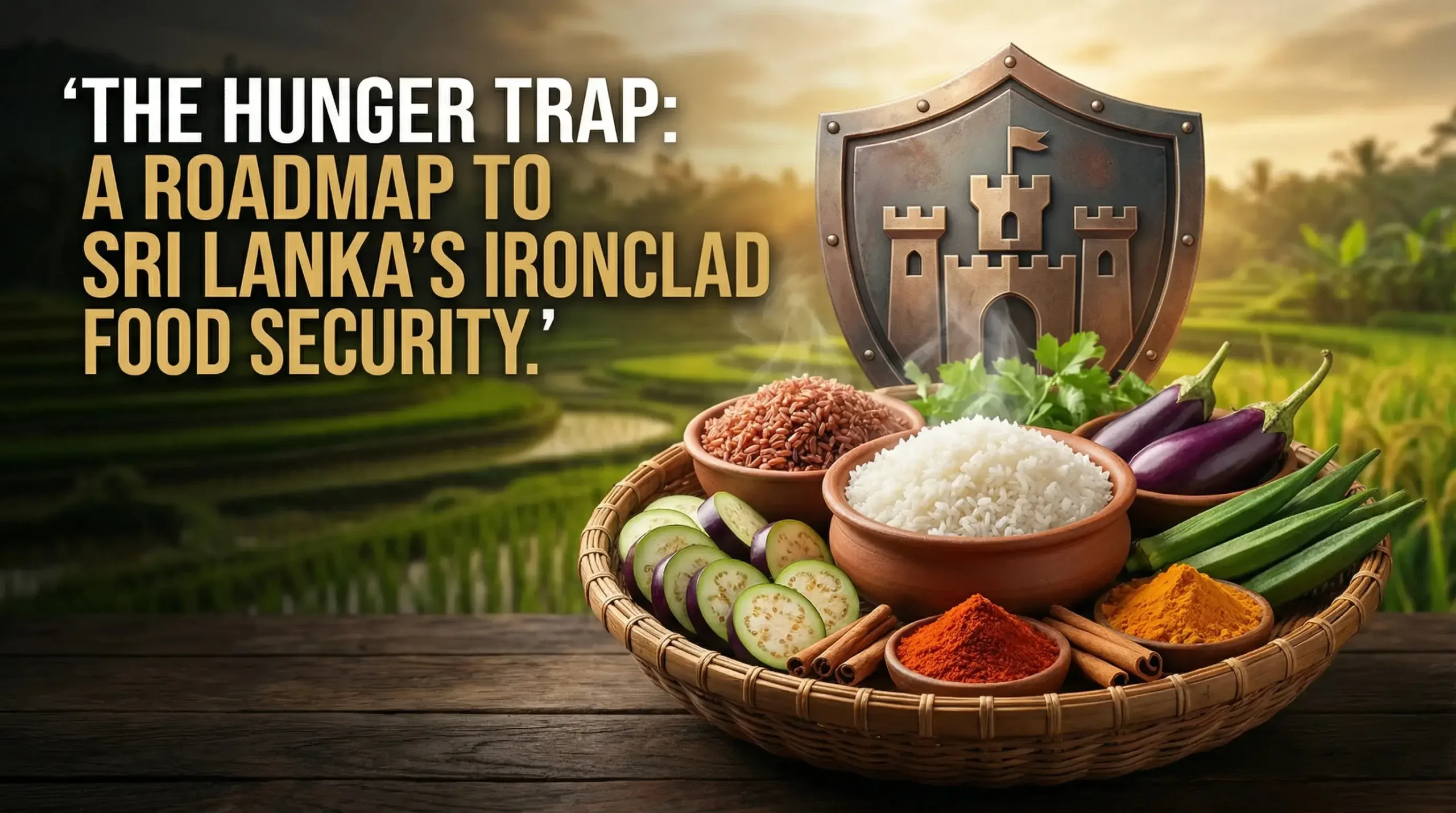
“Food security” is a term often buried in the jargon of global summits. The 1996 World Food Summit defined it as
a state where all people, at all times, have physical and economic access to nutritious food.
It’s a clean definition for a messy reality. In the times and age we live in, food security is the ultimate test of a nation’s backbone. It relies on four pillars: availability, access, utilization, and stability. When these pillars tremble, a nation falls, and a civilization follows.
Sri Lanka didn’t just tremble; it buckled. A few years ago, we became a global case study for a self-inflicted crisis. At its peak, 6.3 million people – 38% of our fellow citizens- faced moderate to severe food insecurity. We held the grim title of the 4th-highest food price inflation on the planet, peaking at a staggering 95%.
The failure was one of policy and infrastructure. While external shocks like the Ukraine war and COVID-19 played their part, the “overnight” ban on chemical fertilizers and a plummeting forex crisis were internal blunders of catastrophic proportions. Today, while the international aid and emergency maneuvers have given us breathing space, UNICEF warns that 2.3 million children in Sri Lanka still need urgent aid. We are not out of the woods; we are merely resting in a clearing.
To ensure this never happens again, we need more than crisis management. We need a long-term strategy that treats food security as a national birthright.
Stopping the Bleed: The Logistics of Waste
Food waste in Sri Lanka is not just a habit; it’s a colossal infrastructure failure. It happens in three acts: pre-harvest, post-harvest, and at the table.
First, nature claims its due share by turning against the farmer. Monkeys, peacocks, and wild boars cause an annual loss of nearly Rs. 17–20 billion. Out of 3,000 million coconuts, monkeys alone claim 200 million. But the true tragedy is what happens after the harvest.
Statistically, 40% of our vegetables and fruits are lost due to human error, primitive transport, improper handling, and a total lack of a “Cold Chain.” We produce 7,000 tonnes of solid waste daily, and 56% of that is food. This isn’t just waste; it’s a disaster of a colossal level.
The Solution:
We must transform our railway into the backbone of our logistics. Instead of hundreds of lorries idling in traffic, we should convert cities like Avissawella, Kurunegala, and Aluthgama into gathering hubs. Use the rail network to move securely packed bulk cargo directly into urban centers. It reduces congestion, cuts fuel usage, and keeps the produce fresh. For animal damage, we need scientific “multi-vector” approaches, bio-fences, and ecosystem-balanced population control, not just political rhetoric.
The Blue Revolution: Tapping the Indian Ocean
We are an island nation with 1,620 kilometers of coastline and an Exclusive Economic Zone of 517,000 square kilometers. The ocean is our greatest underutilized asset. While 50% of our protein comes from fish, nearly 40% to 60% of our catch is wasted before it reaches a plate due to poor on-vessel storage.
We need to treat the fisheries sector as a modern industry priority. This means better gear, aggressive investment in inland fishing, and assertive marine laws to protect our waters from shipping accidents and oil spills, as well as the bottom trawlers that come from the neighboring shores. Our ocean is not just a view;it’s a primary source of survival.
Culinary Sovereignty & The Market
Our culinary culture is heavily tilted toward rice, but it’s time to look to the waves for a new generation of food. Sea vegetables, Kelp, Nori, and Irish Moss, are highly nutritious and lucrative. We should be researching how to integrate these into the Sri Lankan palate while cultivating them for export.
However, even the best food production means nothing if the law doesn’t protect the consumer. Today, middlemen collect excessive commissions while the poor pay the price. We need market digitization, connecting the farmer directly to the buyer through digital platforms, and rapid inspection mechanisms to stop the predatory pricing and substandard ingredients that have become common in our markets.
Livestock: Moving Beyond the Rural Idyl
Livestock in Sri Lanka has stayed a rural side-activity for too long. We remain dangerously import-dependent for dairy and animal feed. The poultry industry is trapped in a cycle where high taxes on corn, meant to protect local farmers, actually punish millions of consumers with high egg prices. We need a pragmatic approach: find ways to help maize producers lower their costs instead of taxing the protein off the plates of the poor.
The Vision
Sri Lanka has survived famines, invasions, and disasters for 2,500 years. We have the homegrown wisdom; we just need the visionary leadership to apply modern technology to our agricultural heritage.
Food security must be enshrined as a national interest, beyond the reach of political cycles. It is the birthright of every Sri Lankan to have a full plate. It’s time we stopped managing crises and started building a civilization that can feed itself for the next 2,500 years.
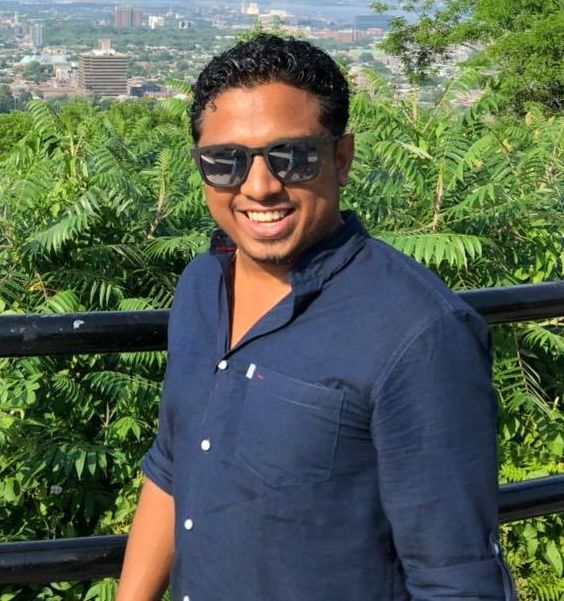
Dhanuka Dickwella is a distinguished Sri Lankan poet, author, and multifaceted professional whose work spans literature, geopolitics, and social activism. Holding a Master’s degree in International Relations, he has established himself as an expert in geopolitics and geoeconomics, fields that inform his analytical and creative endeavours.
His professional portfolio includes significant editorial and journalistic roles: he serves as the Executive Editor of The Asian Reviews magazine, a platform dedicated to bridging the literary worlds of East and West. Additionally, he contributes as a guest writer for the Chicago-based Armenian Mirror-Spectator, focusing on geopolitical issues in the Caucasus region, and as a columnist and guest speaker for Force, an Indian magazine addressing security and defense matters. Dickwella’s career in public service is equally notable. Dhanuka Dickwella is the Chief Coordinator for Canada for the Panorama International Literature Festival 2026. He has been actively involved in Sri Lankan politics, having served as a grassroots politician, political campaign director, and council member of a local government body in a rural Sri Lankan town. Prior to his political engagements, he founded and led a foundation dedicated to empowering youth and supporting underprivileged communities, reflecting his commitment to social equity. Currently, he advises youth groups on political activism and broader political trends, leveraging his extensive experience to foster the next generation of civic leaders. Beyond his analytical and political pursuits, Dickwella is a celebrated poet and blogger whose literary work explores the complexities of human emotion and experience. His debut poetry collection, Voices of Lust, Love and Other Things, showcases his ability to weave personal narrative with universal themes. An ardent climate and social activist, he champions sustainable development and social justice, driven by a vision of a better world for future generations. A proud Sri Lankan patriot, Dickwella is also a devoted father to his daughter, whose influence is a cornerstone of his personal and creative life. Dhanuka Dickwella’s diverse achievements reflect a rare synthesis of intellectual rigor, artistic expression, and civic dedication, positioning him as a prominent voice in both Sri Lankan and global contexts.
Leave a Reply