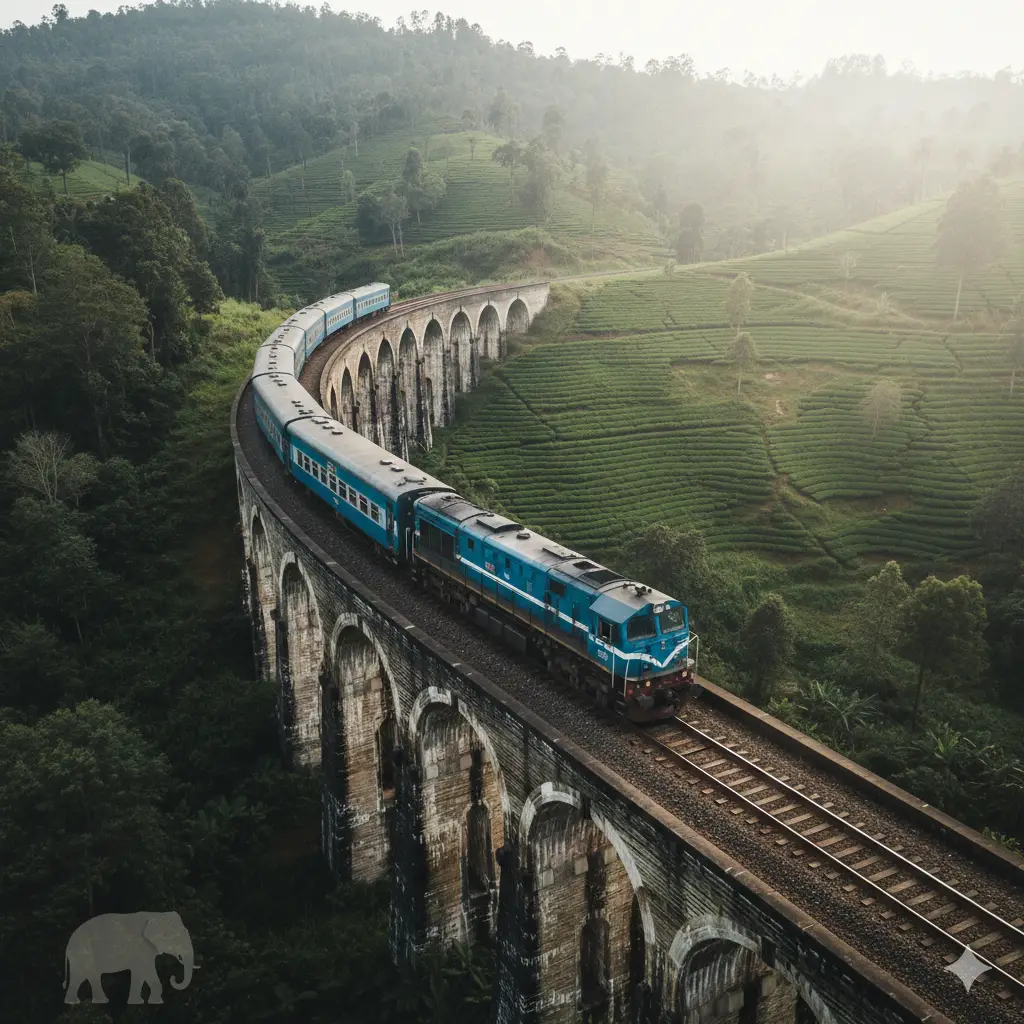
The Sri Lankan railway is a bridge between two worlds. It began as a colonial tool of “Steel” designed for the cold efficiency of extraction, yet it has survived to become a “Silk” ribbon that ties the ethnic, social, and geographic diversity of the island together. In 2026, it stands at a complex crossroads: simultaneously an aging public service, a vital economic lifeline for the working class, and a global superstar in the world of luxury adventure. However, it remains a huge burden riddled by enormous debt burdens as a loss-making venture.
The Arteries of the Island: Defining the Lines
The network consists of approximately 1,500 km of broad-gauge track, functioning as the skeletal system of the nation. To understand the railway is to understand its distinct paths. The network consists of a number of significant lines along with a few branching outs, of which some are mentioned here.
- The Main Line: The crown jewel, running from Colombo Fort to Badulla. It climbs to 6,225 feet, traversing the heart of the tea country and the central highlands.
- The Coastal Line: Stretching from Colombo to Beliatta, this scenic route hugs the southwestern coast, serving as a vital link for sea-breeze commuters.
- The Northern Line: Reaching from Colombo to Kankesanthurai (KKS), it serves as a historic symbol of national reconciliation.
- The Mannar Line: Stretching from Medawachchiya to Talaimannar, it ends at the hauntingly beautiful pier that once connected the island to India via the “Boat Mail” ferry.
- The Kelani Valley (KV) Line: Originally a narrow-gauge path for rubber extraction, this “Green Path” snakes through dense backyards and jungle canopies from Colombo to Avissawella.
- The Matale Line: A branch line from Kandy to Matale, serving the spice-growing heartlands and the northern foothills of the Knuckles Range.
- The Puttalam line or North-Western Line : Branching out of Ragama, runs through the coconut triangle on the scenic west coast
Queens,Princesses and Canadians: The Menike Lineage
In the tapestry of the Sri Lankan railway, there exists a profound and poetic irony: the soul of the system is decidedly feminine, yet it operates within a society where the progress of women’s rights remains a marginal, slow-moving tide. The trains are not merely machines; they are cultural icons, christened with names of royal prestige. To board the Udarata Menike (Queen of the Highlands) or the Tikiri Menike (Little Maiden, No. 1023/1024) is to participate in a linguistic ritual of reverence. From the Ruhunu Kumari (Princess of the South) to the Samudra Devi (Queen of the Oceans), the tracks are a runway for “Queens” and “Princesses,” embodying a romanticised feminine ideal.
This stands in stark contrast to the “Steel” legacy of the West. When the Canadian Class M2 locomotives arrived in the 1950s, rugged, square-jawed, and built for endurance, they were named with the pragmatic dignity of the North: Alberta, Saskatchewan, Quebec, Ontario, Manitoba, British Columbia, Newfoundland, Montreal, and Vancouver. In Canada, a locomotive is a titan of the terrain, named after the land itself.
The irony is sharp: in Canada, where the trains bear the names of cold provinces, women enjoy enormous social and financial sovereignty. In Sri Lanka, while the “Menikes” are celebrated in song, the women picking the tea or commuting in crowded “Ladies’ Compartments” are still fighting for the basic rights their royal namesakes seem to promise. It is a system of “Silk” nomenclature masking a “Steel” reality of social struggle.
Train Subculture and Ecosystem
Beyond commuting, Sri Lankans share a deep visceral connection with the rails. It has birthed a distinct subculture rich in linguistic nuance, folklores, songs, dramas and various traditions,not to mention the “train relationships” that end in both marriages and divorces. The ecosystem is vibrant: vendors move through compartments selling hot fried peanuts and chilled beverages, while singers, drummers, and beggars make this mini-world their stage. While the official names for a train remain, the commuters have their own, often hilarious alias for each train. The alias may be formed mostly on the shape of the locomotive, the destination it heads to or its colours.
The Modern Fleet and the “Insta-Famous” Boom
While the sturdy Canadian veterans provide the mechanical backbone, a new aesthetic has swept across the island’s tracks. The vibrant blue S12 and S14 diesel-units,Chinese-built marvels that tilt into highland curves, have become the cinematic face of the Main Line. Alongside them, the Indian-built M11 powerhouses provide the rugged durability required to pull heavy freight from coastal heat into thin mountain air, while the sleek S13 and S13A operate in various lines.
This modernisation has fueled a global digital resurgence. Travellers flock to the Nine Arch Bridge, a stone viaduct born of necessity during WWI steel shortages, to capture the blue trains against emerald tea estates. Here, the unique “open-door culture” shines; unlike the sterile, sealed environments of Western transit, these trains invite passengers to lean into the elements. It is a wind-in-your-hair experience that symbolises a raw freedom elsewhere lost, proving that the system retains a wild, “Silk” soul.
Technical Realities: Strains and Safety
Beyond the beauty lies a system under immense pressure. The railway remains a heavily subsidised public utility, keeping ticket prices lower than a cup of tea. This creates a massive financial deficit and a defining debate: is the railway a service or a profit-making business?
Modernisation is often slowed by the fierce resistance of powerful Unions and a reliance on the Edmondson Ticket System, small cardboard rectangles printed on Victorian-era machinery. Furthermore, the path is physically treacherous as a result of the 2025 Dituwa cyclone. It caused landslides along the track in multiple localities, effectively destroying the line, a reminder of nature’s power. Yet, rail safety in Sri Lanka remains high due to the “human factor.” Without high-tech auto-braking, safety is maintained by Track Walkers and the Tablet System, where the muscle memory of drivers provides the security that algorithms provide elsewhere.
But there is an untold tragedy. Although major train accidents are unheard of, the cost of life due to trains remains high. Sri Lanka loses hundreds of citizens annually to accidents at unsecured railway crossings, a reality that economic woes make difficult to rectify. The tragedy extends to nature; the country’s beloved yet endangered elephants die in significant numbers, particularly on the Northwestern and Eastern lines, where the “Steel” path cuts through their ancient jungle corridors.
Conclusion: A Living Monument
From monorails to electrification, modernisation plans have been proposed for decades, only to be scrapped by shifting political tides. Modernising the railway, rooting out corruption and creating a 21st-century miracle remains an eternal election promise. People have dreamed of safe, comfortable, and affordable travel since independence. An effective, modernised system could ignite a rapid economic revival as the Sri Lankan railway remains the heart of the nation. Whether it remains a living museum, moving at 40 kilometres per hour through the world’s most beautiful scenery, or surges to become a high-speed engine of the modern world, remains the island’s greatest unfinished journey.
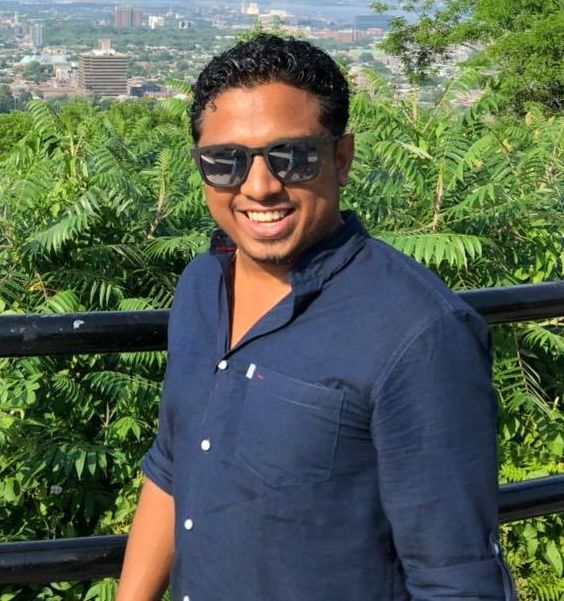
Dhanuka Dickwella is a distinguished Sri Lankan poet, author, and multifaceted professional whose work spans literature, geopolitics, and social activism. Holding a Master’s degree in International Relations, he has established himself as an expert in geopolitics and geoeconomics, fields that inform his analytical and creative endeavours.
His professional portfolio includes significant editorial and journalistic roles: he serves as the Executive Editor of The Asian Reviews magazine, a platform dedicated to bridging the literary worlds of East and West. Additionally, he contributes as a guest writer for the Chicago-based Armenian Mirror-Spectator, focusing on geopolitical issues in the Caucasus region, and as a columnist and guest speaker for Force, an Indian magazine addressing security and defense matters. Dickwella’s career in public service is equally notable. Dhanuka Dickwella is the Chief Coordinator for Canada for the Panorama International Literature Festival 2026. He has been actively involved in Sri Lankan politics, having served as a grassroots politician, political campaign director, and council member of a local government body in a rural Sri Lankan town. Prior to his political engagements, he founded and led a foundation dedicated to empowering youth and supporting underprivileged communities, reflecting his commitment to social equity. Currently, he advises youth groups on political activism and broader political trends, leveraging his extensive experience to foster the next generation of civic leaders. Beyond his analytical and political pursuits, Dickwella is a celebrated poet and blogger whose literary work explores the complexities of human emotion and experience. His debut poetry collection, Voices of Lust, Love and Other Things, showcases his ability to weave personal narrative with universal themes. An ardent climate and social activist, he champions sustainable development and social justice, driven by a vision of a better world for future generations. A proud Sri Lankan patriot, Dickwella is also a devoted father to his daughter, whose influence is a cornerstone of his personal and creative life. Dhanuka Dickwella’s diverse achievements reflect a rare synthesis of intellectual rigor, artistic expression, and civic dedication, positioning him as a prominent voice in both Sri Lankan and global contexts.
Leave a Reply