Fellow Koreans!
In the 21st century, culture is power. It is an era where an individual’s imagination becomes creative content. Across the world, the ‘Korean Wave’ is welcomed with great affection—not only for the joy it brings, but for the abiding pride it instills in every Korean. This is the fruit of five thousand years of cultural splendor, a convergence of tangible and intangible heritage, and the spiritual ethos of our people.”
—Park Geun-hye, former President of South Korea
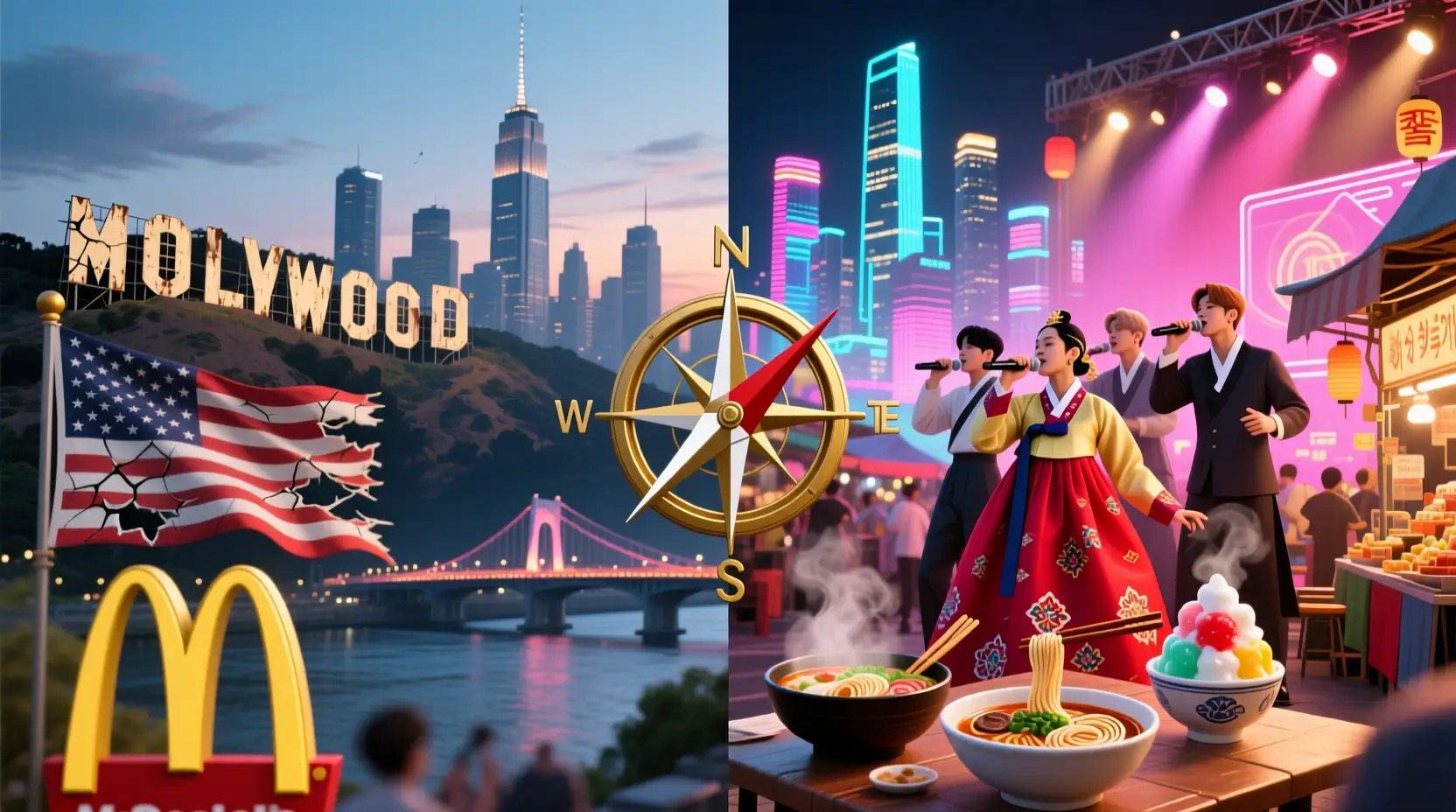
Like many Asian nations, Korea can trace its cultural roots back millennia. Yet, for most of the 20th century, it wasn’t Asia—but America—that dominated the global imagination. American icons became universal archetypes: the muscle-bound grit of Rambo, the mechanical cool of Arnold Schwarzenegger, the radiant charm of Julia Roberts, the moonwalking genius of Michael Jackson, the daring allure of Madonna. For children from Colombo to Copenhagen, these figures weren’t just celebrities—they were heroes, role models, the very embodiment of aspiration.
American brands, too, became global rituals. A chilled Coca-Cola on a summer afternoon, a greasy Mcburger from McDonald’s, a crispy KFC drumstick, a frothy Starbucks frappé, or a bowl of James C. Jackson’s cereal—these weren’t mere products; they were symbols of participation in the American dream. Hollywood films, pop anthems, Saturday morning cartoons, denim jeans, and sneakers stitched together a planetary uniform of desire. America didn’t just sell goods—it sold a way of life: confident, fast-paced, individualistic, and seemingly open to all.
After the Soviet Union collapsed, even Moscow—once an ideological fortress—welcomed its first McDonald’s with fanfare. Backed by American capital and amplified by U.S.-based media empires, American culture surged across borders not with tanks, but with tunes, scripts, and slogans. This was soft power at its zenith: not conquest by force, but seduction by narrative. The world didn’t just admire America—it wanted to be like it. American values—individualism, equality, informality, future-orientation, achievement, material success, directness, and an almost sacred reverence for time—seeped into workplaces, classrooms, and living rooms worldwide. For a nation younger than many imperial dynasties, this cultural hegemony was nothing short of extraordinary.
But history rarely moves in straight lines.
Today, the world’s top boy bands aren’t Backstreet Boys or Westlife—they’re BTS, EXO, TXT, ATEEZ, NCT, MONSTA X, GOT7, Super Junior, SHINee, and Wanna One. All hail from South Korea. In a telling sign of their influence, BTS stood on the United Nations stage not as performers, but as speakers on climate change—a testament to their global moral reach. Meanwhile, Korean dramas, Japanese anime, Turkish series, and Chinese cinema captivate audiences from Seoul to Colombo, Johannesburg to Brussels, even Washington, D.C. The culinary tide has turned too: while 36,000 McDonald’s operate worldwide, the United States alone hosts 40,000 to 45,000 Chinese restaurants, alongside over 7,000 Indian and 7,000 Korean eateries. Boba tea, kombucha, sushi, turmeric lattes, and plant-based Indian curries are now mainstream. Yoga mats outnumber gym memberships in some cities; acupuncture clinics and feng shui consultants thrive in suburban strip malls. Eastern practices once dismissed as “exotic” are now pillars of Western wellness.
While Eastern cultural currents surge westward, American soft power is receding, quietly, but decisively.
Part of the problem lies within. The United States is still searching for a coherent cultural identity. On one side, progressive America champions an ever-expanding lexicon of gender identities, “woke” discourse, and cancel culture—concepts that often bewilder societies rooted in more traditional frameworks. On the other, conservative America clings to a vision steeped in Christian ethics, whiteness, and nationalism—ranging from church-going moderates to the alt-right and, further still, to white supremacist factions. These two Americas don’t just disagree; they speak different moral languages. How can a fractured society project a unified cultural appeal?
Worse still, America’s modern symbols are no longer aspirational—they’re traumatic. The world now associates the Stars and Stripes not with liberty, but with the nine-minute chokehold on George Floyd, the torch-lit racism of Charlottesville, the opioid epidemic devouring small towns, the violent chaos of the Capitol Hill riot, the endless cycle of school shootings, and sprawling encampments of the unhoused beneath gleaming skylines. These aren’t footnotes in the American story; they’ve become the headlines.
And the backlash is global. From Doha to Budapest, nations are pushing back—not just politically, but culturally and spiritually. At the 2022 FIFA World Cup in Qatar, Western media’s moral lecturing about “human rights” clashed sharply with local values, sparking resentment rather than reform. In Central and Eastern Europe, leaders openly reject “American cultural imperialism,” framing it as a threat to national identity. The Global South, long courted by U.S. diplomacy, now questions why it should emulate a society so visibly at war with itself.
Crucially, the decline of American soft power isn’t merely due to Asia’s rise or domestic division. It’s also the consequence of America’s own militarism. When fighter jets, drones, and aircraft carriers appear more frequently on global screens than Hollywood blockbusters or chart-topping albums—when regime change becomes the tool of first resort, not last—culture loses its innocence. Soft power cannot survive alongside the optics of empire. Public diplomacy has been replaced by public arrogance. Over decades, the emphasis shifted from sharing stories to enforcing sanctions, from exporting jazz to exporting missiles.
Now, America scrambles for new icons. Taylor Swift—a talented, apolitical pop sovereign, is held up as a potential savior of cultural goodwill. She is polished, globally beloved, and unmistakably American. But can one artist offset systemic erosion? Can she restore trust when the world sees American foreign policy as reckless and self-serving?
The real question isn’t whether America can manufacture new heroes. It’s whether it can rediscover humility. Until U.S. leadership understands that selling movies, music, and meals is far more profitable—and enduring—than selling F-16s, the decline will continue. No amount of star power can mask the hollowness of a worldview that confuses dominance with influence.
True soft power isn’t projected, it’s earned. And it begins not with grandstanding, but with listening.
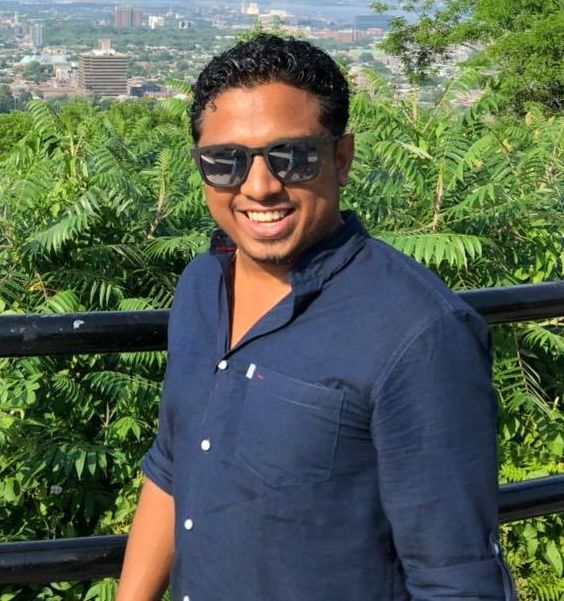
Dhanuka Dickwella is a distinguished Sri Lankan poet, author, and multifaceted professional whose work spans literature, geopolitics, and social activism. Holding a Master’s degree in International Relations, he has established himself as an expert in geopolitics and geoeconomics, fields that inform his analytical and creative endeavours.
His professional portfolio includes significant editorial and journalistic roles: he serves as the Executive Editor of The Asian Reviews magazine, a platform dedicated to bridging the literary worlds of East and West. Additionally, he contributes as a guest writer for the Chicago-based Armenian Mirror-Spectator, focusing on geopolitical issues in the Caucasus region, and as a columnist and guest speaker for Force, an Indian magazine addressing security and defense matters. Dickwella’s career in public service is equally notable. Dhanuka Dickwella is the Chief Coordinator for Canada for the Panorama International Literature Festival 2026. He has been actively involved in Sri Lankan politics, having served as a grassroots politician, political campaign director, and council member of a local government body in a rural Sri Lankan town. Prior to his political engagements, he founded and led a foundation dedicated to empowering youth and supporting underprivileged communities, reflecting his commitment to social equity. Currently, he advises youth groups on political activism and broader political trends, leveraging his extensive experience to foster the next generation of civic leaders. Beyond his analytical and political pursuits, Dickwella is a celebrated poet and blogger whose literary work explores the complexities of human emotion and experience. His debut poetry collection, Voices of Lust, Love and Other Things, showcases his ability to weave personal narrative with universal themes. An ardent climate and social activist, he champions sustainable development and social justice, driven by a vision of a better world for future generations. A proud Sri Lankan patriot, Dickwella is also a devoted father to his daughter, whose influence is a cornerstone of his personal and creative life. Dhanuka Dickwella’s diverse achievements reflect a rare synthesis of intellectual rigor, artistic expression, and civic dedication, positioning him as a prominent voice in both Sri Lankan and global contexts.
Leave a Reply