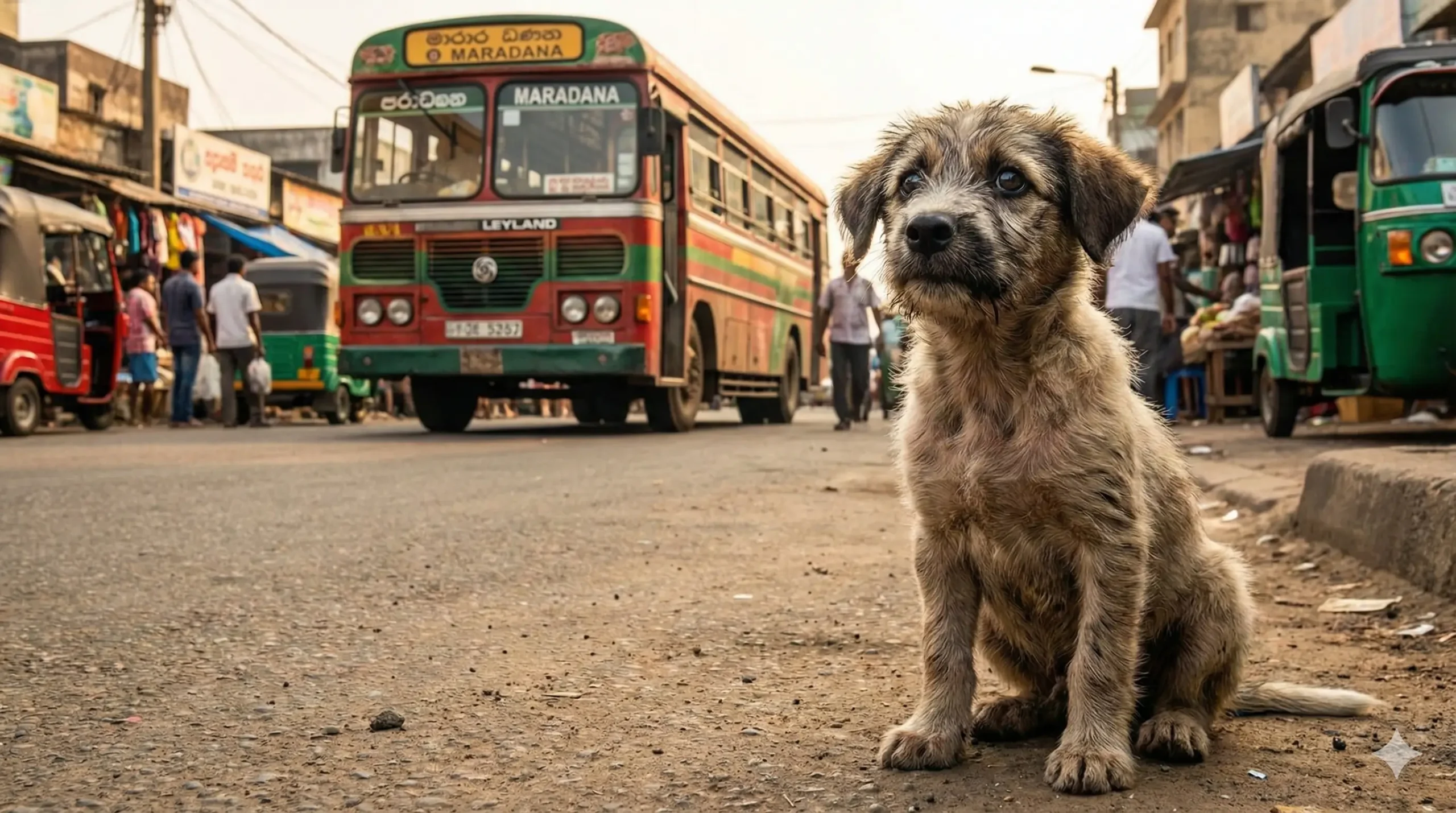
‘Petit Bouton’ looked over the balcony, sitting on his comfortable Furheaven dog mattress. He could see Parc La Fontaine across Papineau Street. The park was such a beautiful place where Ducks, Squirrels, GroundHogs, Seagulls, and tens of other animals shared a lush space with the good people of Montreal. A happy place indeed. He looked at the busy Papineau Street. There was not a single dog idling, wandering, or lying near the street. Weird! He thought. Then he suddenly remembered that he was no longer in Sri Lanka, where he was born, and the dogs were plentiful on the roads. Montreal was his adopted city. It was two oceans, three continents, far from his home.
His journey to this strange yet wonderful land was an epic tale.
Petit Bouton started his nostalgic trip down memory lane while biting a rubber bone. Ever since he came to Montreal, he thought of life back home almost every evening. He was born in one of the busiest burrows of Sri Lanka’s commercial capital, Colombo. His burrow was called Maradana or Colombo 10. The neighborhood was not very affluent. There were a lot of Muslims living in the area, while having the most famous Buddhist school in the heart of it. Contrary to the wishes of Politicians, the Buddhists in the school and its Muslim neighbors lived in harmony. Ah, an opportunity for ethnic tension was totally missed. Anyway, in this neighborhood, there were a lot of dogs. They were brown, black, gray, white, and mixed colors. Most of them had no owners.
Those dogs in Sri Lanka were known as ‘Paraya dogs’. When you translate, it means ‘outcast or alien’. For example, the British, Portuguese, and Dutch who colonized Sri Lanka are called ‘Para Suddho’, meaning the ‘alien white people’. True to the very meaning, the Paraya dogs were totally stray and had no clear family, like in the case of Petit Button, who was born to a nameless mother and had 15 nameless siblings. His mother had so many lovers. It was quite common among the Sri Lankan dogs but not so much among their people. So our friend did not know who his real father was. It could have been the brown and white dog living near Jamila’s house, the tadpole-eyed gray dog living near the nearby temple, or even some random dog who strayed from Dematagoda. Who knows. Anyway, it was not like Petit Bouton ever had a pedigree and was going to appear in a fancy dog show. Who would have given a second thought about a Paraya dog? Despite having no names or clear lineage, all those dogs had a place where they hung around. Kind of a territory. The dogs, like their ancestral wolves, were territorial. As Maradana was so dense, this resulted in terrible dogfights, almost on a daily basis. Sadly, there were no arbitrators or mediators to solve their disputes. The might was the only right. It was the rule of law on every Sri Lankan street for dogs and humans alike.
When Petit Bouton was still a tiny puppy, his mom was killed by a horrible accident. A Leyland bus running from Borella to the Colombo fort ran over his mom, making them orphans. The bus was driving so fast, which is rare for the buses on this route, but not on others. The buses on this route are known for being beaten by tortoises for the slow pace at which they drive. Maybe the driver had to go to the washroom and was in a real hurry. He never stopped to see who he ran over or what happened to that life. The driver just kept driving, and someone who works as a janitor for the Municipality collected the body to be dumped somewhere. There were no funerals, flowers, cards, or tears for our friend’s deceased mother. No owner shared this sad story on Instagram and had their followers express feelings with emojis. This happens all the time in Sri Lanka. Dogs die all the time on the streets, and no one gives a two hoot. They are, after all, Bastard dogs. So who would have cared anyway? There was this famous swearing among Sri Lankans where an angry person would shout and say, ‘ I will kill you like a dog’. That was a violent form of expressing frustration and anger. But the point here is that the dogs had the least value in the entirety of the animal world in Sri Lanka. Otherwise, one could have picked perhaps a cockroach or a rat that caused mayhem and damage to humans instead of picking the ever-friendly dog for a swear. Such are Sri Lankan expressions, at times with no logic.
Since the day his mom died, Bouton, his brothers, and sisters were at the mercy of the people around them. As puppies, they did not understand what death meant or whether they would see their mom again. But they all cried the first day in such pain for two reasons. Losing a mother is the most devastating, heartbreaking, and agonizing thing for any living thing; it is simply an irreplaceable loss. As puppies, they needed milk, warmth, and protection. Losing mom was losing all of that and the very little love that a street dog in Sri Lanka would ever have. But when you are on Sri Lankan streets, whether you’re a dog or a human, your survival solely depends on one thing and one thing only. Adapting to the day’s reality very, very fast.
The fifteen puppies realized that harsh truth the same evening when it started to rain. A typical, ‘raining cats and dogs’ type of downpour, which is very common during the monsoon season but not at the time of the year we are talking about here. This unusual rain at unusual times was perhaps a sign of climate change, which neither the Islanders nor their government had a clue about. The unexpected rain was a tragedy that struck upon the already mourning puppies. Looked like misfortunes never come singly. There was no mom to shelter them that evening, and due to the rain, no humans were around to provide them with one either. So the eldest of the group led the herd to a nearby shop where there was a small corner that protected them from heavy rain. They crawled and hugged together to keep themselves warm. It worked well. Of course, they could not compare it to Mom’s warmth.
Soon they were hungry and did not know what to do. But the natural instinct kicked in fast enough that they started to make small, painful howls and cries fueled by unbearable hunger. A man living nearby heard their cries and offered them a bowl of diluted milk powder. The man could not afford more than one scoop of milk powder as he already had three hungry children at home. Besides, milk powder was a rare commodity at the time and was expensive. He had to wait in a three-kilometer queue for three hours to buy just one packet. But how could you ignore the endless hungry cries of babies, whether they are human or not? Just to give them a taste of milk, he added one full scoop of milk powder to almost a liter of water. The little, helpless puppies gulped it within minutes. That night, they learnt their very first lesson on the street. If you need something, cry and scream, or in other words, fight until you get it. That was the only way out.
This bunch of puppies became the talk of the area in no time. The good people of Maradana tried to feed them in some way or another. Since Milk powder was too expensive for the neighborhood dwellers, they tried to train the puppies on solid food. What I mean is rice mixed with a bit of curry, which was the kind of meal any Paraya dog enjoyed on the streets or at home. The schoolboys of a nearby College gave a part of their lunch to the sweet orphan puppies. The monks living in the temple on the adjacent road, even the tuk-tuk drivers in the nearby tuk-tuk station, fed them. There was a stereotype classification about the tuk-tuk drivers as heartless, opportunistic, uncultured, and vultures. But in reality, they were also someone’s brother, father, son, or an orphan who cared about other living things as much as an empathetic social media influencer said they did. Tuk-tuk drivers not only gave them food but also kept them from harm’s way.
Within a couple of days of the death of their mom, people adopted almost all of Bouton’s siblings. The ones who looked healthy, with more fur, or the most active ones, were the first to win the hearts of people. So they found homes. Button was the smallest of the herd and had a distinct button-like nose, which was kind of a turn-off for many people. Hence, no one cared to adopt him.
There were a few fundamental differences between the adopted Paraya dogs who lived in homes and the stray ones idling by the road. The adopted ones were considered pets who enjoyed love, attention, and especially food. They even got a shower. Not very often, but when they started to smell bad, their masters bathed them for their own sanity. Some even had the rare opportunity of seeing a vet once in a while. They had names, chains, collars, and at times even their own dog house. But they had to do a job that was 24/7 and 365 days a year. Guard the house at all costs. Christmas, New Year, Halloween, full moon, election day, the day Sri Lankans lost the cricket match to India; it did not matter. They had to make sure that no intruders trespassed on their masters’ properties. This was a serious and sacred job that the dogs did with heads held high. Being outsmarted by a thief would earn an immediate rebuke and irreparable reputational damage to a dog. Such dogs were called dumb, useless ones whose only purpose in life was eating and sleeping. This was a crown of shame and disgrace that no dog would ever want to have. Just like Sri Lankan men were expected to be tough creatures who did not have tears, the Paraya dogs were expected to be playing Rottweilers without mercy.
As it was becoming evident that Bouton had no such luck of getting adopted, his fate started to be sealed. A puppy who was neither the cutest nor the most active had only one way of life. Ending up as a stray dog whose entire life will be spent on the streets and will finally be either killed by an accident or die from starvation. No one wanted him except for the busy roads. There was an old dog who used to live close to where Bouton was staying. The old dog had seen it all and had survived the dangerous roads, careless drivers, sadistic pedestrians, starving nights, bigger and more aggressive alpha dogs, and even broken hearts a few times. Dogs did fall in love but always got confused about who was their priority. Lost between unconditional love for their masters and romance towards their kind, their love stories were always utterly messy. No one wrote about those stories anyway. He had fathered an endless number of puppies with so many unknown Dames. He never knew his children, and even the ones he knew lived terrible lives. Some were beaten, some were bitten, and some died at the hands of hit-and-run drivers. He also knew the human world really, really well. From the poor slum dwellers to the wealthy businessmen who were not very many in the area, the old dog knew everyone. He even saw powerful politicians whose children were studying in the famous Buddhist school. He was an encyclopedia disguised as a dog in every sense. The old dog became friendly with Bouton and taught him a lot about the dog world and the human world alike. At a very tender age, Bouton learned the dark, ugly truths about the street dogs as well as strange things about humans from his old pal. It was the finest education a dog could ever wish for. But his life remained hard, sad, and tough for a puppy of his age.
That was until one day, two white women who were on a photography tour met him. Seeing unfamiliar humans whose skin looked different from neighborhood humans, speaking a musical yet strange language, and wearing sunglasses that were not common for people around, Bouton got scared. He had to defend himself. His mother could not defend herself like many other dogs and even women in Sri Lanka. Men were mostly like the ruthless bus driver. They couldn’t care less for the emotions, pains, struggles, and pleas of women or the weak. The two women were fascinated seeing a small puppy barking fiercely, thinking of himself as a roaring lion.
“Look at the cutie’ Natalie said to her lover Geneve.
“ He is feisty, eh !! “ For Geneve, it was love at first sight. She instantly fell in love with this little button-nosed puppy. She asked Natalie to adopt him instantly. Seeing Geneve’s eyes, Natalie could not resist. Those eyes were always full of life, light, love, and bubbly. The very reason she fell in love with her.
If they were in Montreal, Natalie would have given her a hug and a kiss. But doing that in Sri Lanka was asking for trouble and more. Straight love was the only eligible form of intimacy approved by its society and even by the laws of the state. The entire lettering of LGBTQ+ was not only a taboo subject but also barred by law. So she only gave a little squeeze and agreed to Geneve’s idea. Before the British came to Sri Lanka in search of glory, god, and mostly Cinnamon, the society was tolerant towards different sexual orientations. But the Colonial British masters introduced this anti-gay law to make sure that none of Her Majesty’s soldiers would desert in search of forbidden love. Unfortunately, even after the British left, the country could not manage to get rid of this harrowing colonial hangover. That is why Natalie and Geneve had to hide their intimate emotions from the public. The country probably had so many Natalies and Geneves wishing for a day they could hold hands freely and express their romance openly. But all the Natahlies, Geneves, and anyone who had such thoughts were forced to live in secrecy for fear of being stigmatized, ridiculed, insulted, or even being ostracized by society. Sadly, they had to take their hidden emotions to the grave alone. Some decided to marry someone whom they did not love, but for the sake of being seen. Such was life in Sri Lanka.
With a near-impossible haggling back and forth for weeks, the duo managed to finally adopt a Paraya Dog from Sri Lanka. Adopting a dragon or a Tyrannosaurus would have been a much easier feat, given the amount of government red tape. Until Bouton got his clearance, they kept him in a rented house, fed him, gave him vaccines, and even a name. ” Le petit bouton,” or the small button, was his French name. He soon became their world, and for Bouton, this was an unrealistic dream come true. But the human saying of ‘every dog has its day’ was not just hollow words. This time it was real for our little puppy.
( Let’s meet with the part 2 )
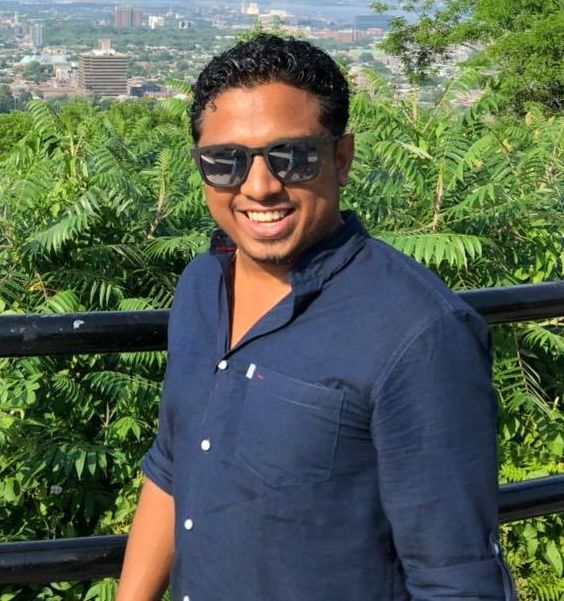
Dhanuka Dickwella is a distinguished Sri Lankan poet, author, and multifaceted professional whose work spans literature, geopolitics, and social activism. Holding a Master’s degree in International Relations, he has established himself as an expert in geopolitics and geoeconomics, fields that inform his analytical and creative endeavours.
His professional portfolio includes significant editorial and journalistic roles: he serves as the Executive Editor of The Asian Reviews magazine, a platform dedicated to bridging the literary worlds of East and West. Additionally, he contributes as a guest writer for the Chicago-based Armenian Mirror-Spectator, focusing on geopolitical issues in the Caucasus region, and as a columnist and guest speaker for Force, an Indian magazine addressing security and defense matters. Dickwella’s career in public service is equally notable. Dhanuka Dickwella is the Chief Coordinator for Canada for the Panorama International Literature Festival 2026. He has been actively involved in Sri Lankan politics, having served as a grassroots politician, political campaign director, and council member of a local government body in a rural Sri Lankan town. Prior to his political engagements, he founded and led a foundation dedicated to empowering youth and supporting underprivileged communities, reflecting his commitment to social equity. Currently, he advises youth groups on political activism and broader political trends, leveraging his extensive experience to foster the next generation of civic leaders. Beyond his analytical and political pursuits, Dickwella is a celebrated poet and blogger whose literary work explores the complexities of human emotion and experience. His debut poetry collection, Voices of Lust, Love and Other Things, showcases his ability to weave personal narrative with universal themes. An ardent climate and social activist, he champions sustainable development and social justice, driven by a vision of a better world for future generations. A proud Sri Lankan patriot, Dickwella is also a devoted father to his daughter, whose influence is a cornerstone of his personal and creative life. Dhanuka Dickwella’s diverse achievements reflect a rare synthesis of intellectual rigor, artistic expression, and civic dedication, positioning him as a prominent voice in both Sri Lankan and global contexts.
Leave a Reply