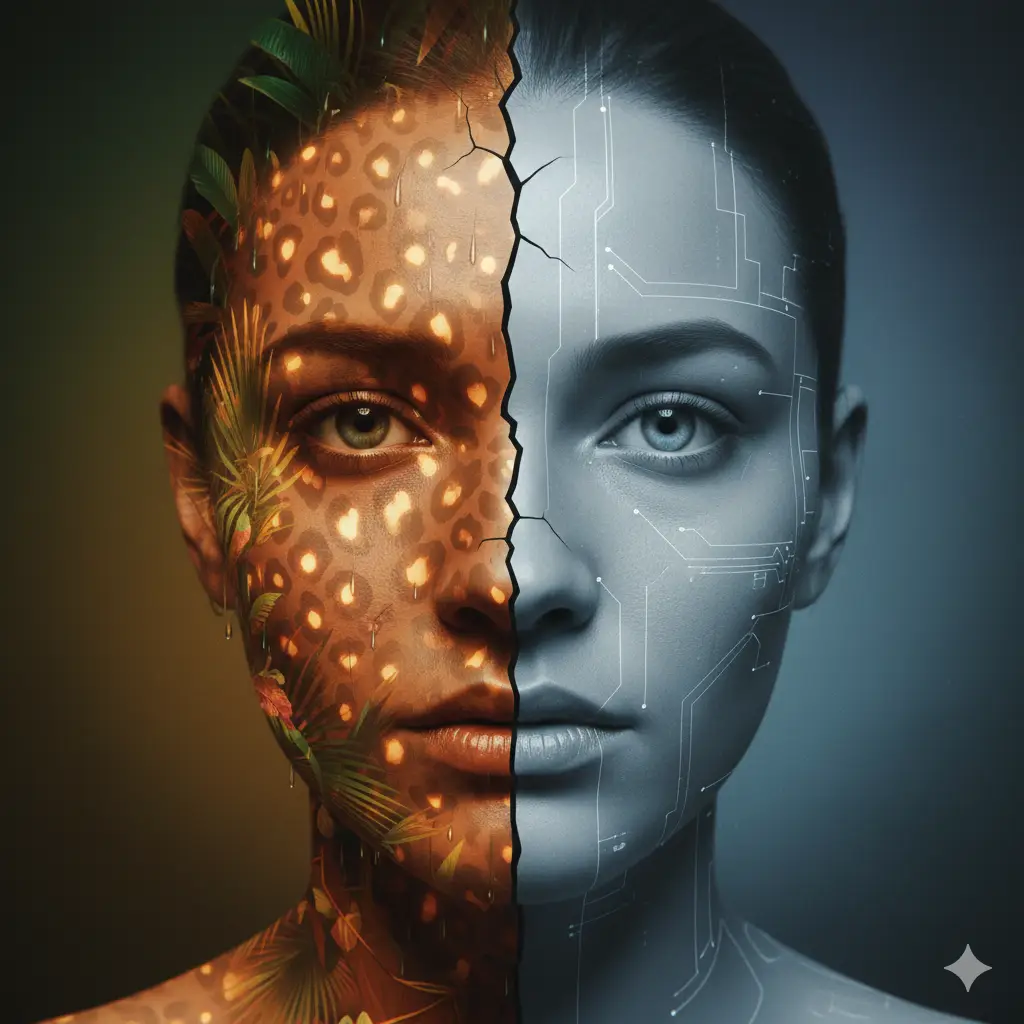
They say a leopard cannot change its spots. But no one tells you what happens when the leopard leaves the savanna, not by force, not by choice alone, but by the quiet unraveling of a life that no longer fits.
Identity, for most, is a tapestry woven early: language at the breakfast table, prayers in a childhood tongue, festivals that mark time like a heartbeat, the unspoken rules of kinship, the scent of soil that means home. These are not preferences. They are anchors.
And then, you move. Not just your body. Your entire world.
Suddenly, your accent is “charming” but not credible. Your name is mispronounced until you shorten it to something smoother, safer. Dhanuka Dickwella becomes just Dhanu. Your grief is too loud. Your joy, too foreign. You laugh at jokes no one else understands. You crave monsoons in a land of snow. Through the woods you will ache for the sound of a jungle fowl that you will never hear.. You will search for the familiar smell of rice hay in corn fields. You learn to say “I’m fine” when your soul is screaming in a language no one here speaks. You will cry looking at a digital screen on the day of the new year where families gathered around tables filled with traditional savouries. This is not assimilation.This is identity erosion, a timeless crisis that existed ever since humans started their migration. Perhaps felt stronger as societies descended into a journey of consumerism.
The Fractured Mirror
The immigrant does not become someone new. They become many selves at once,none fully whole. The son who calls his mother in Sinhala at midnight, voice breaking with longing, yet presents a polished, neutral English accent at work. The woman who wears a sari for Diwali in her apartment, but jeans and a blazer on the metro. The artist who paints with Sri Lankan ochre but titles his work in French to be “taken seriously.” You are not dishonest. You are adaptive. Yet you are lost.
But adaptation has a cost. In the space between selves, a quiet crisis blooms: “If I am not fully here, and not fully there, where do I belong?” A simmering identity crisis that never leaves you in a peace of mind.
The Myth of the “New You”
Western culture loves reinvention. “Start fresh!” they say. “Reinvent yourself!” But identity is not a wardrobe nor a mask. It is bone,flesh and blood. You cannot simply shed your past like a coat nor shed your skin like a cobra. And yet, you cannot wear it openly without being labeled “stuck,” “backward,” or “not integrated.” Too many labels, so little comforts.
So you split. You code-switch not just in speech, but in soul. You mourn your mother’s voice in silence.You celebrate your child’s first word in a language your ancestors never knew. There is beauty and mystify in this hybridity, yes. But there is also grief and regrets, rarely named, rarely honored.
Aesthetic of the In-Between
This is where Unseen Canvas finds its truth. The immigrant’s life is not a clean narrative of arrival and triumph. It is a collage of fragments: A photograph of Colombo rains tucked in a Quebec winter coat. A recipe remembered by taste, not measurement. A lullaby hummed to a child who will never know its homeland. A scar from falling off a mango tree lost in an apple orchard.A noise of an old leyland bus, lost in a silent city.
These are not signs of failure. They are acts of resistance,against erasure, against the demand to “choose a side.” The truest art of the immigrant is not in grand statements, but in these quiet, persistent echoes of self.
Reclaiming the Spots
Perhaps the leopard can change its spots, not by removing them, but by refusing to apologize for their origin. To be an immigrant is not to lose your identity. It is to expand it, to hold multiple truths in one body, to speak with one tongue while dreaming in another, to build a home not in a place, but in the integrity of your own story. And most importantly, talk about it with such passion and admiration.
You are not broken because you are in-between. You are pioneering a new kind of wholeness, one that does not demand purity, but honors complexity.
So let the world call you “confused.” You know the truth.
Your spots are not a flaw. They are your map.
— Dhanuka
Unseen Canvas: Where aesthetics meet ethics in the shadows.
Immigrant Identity, Diaspora, Cultural Hybridity, Identity Erosion, Assimilation, Unseen Canvas, Sri Lankan Diaspora, Code Switching, Grief
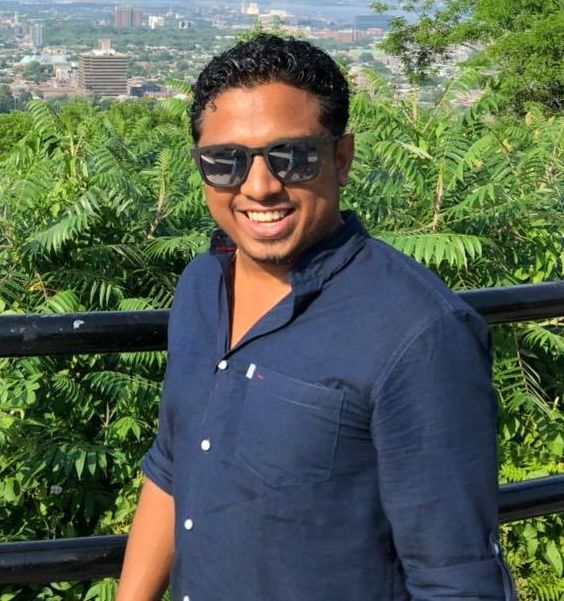
Dhanuka Dickwella is a distinguished Sri Lankan poet, author, and multifaceted professional whose work spans literature, geopolitics, and social activism. Holding a Master’s degree in International Relations, he has established himself as an expert in geopolitics and geoeconomics, fields that inform his analytical and creative endeavours.
His professional portfolio includes significant editorial and journalistic roles: he serves as the Executive Editor of The Asian Reviews magazine, a platform dedicated to bridging the literary worlds of East and West. Additionally, he contributes as a guest writer for the Chicago-based Armenian Mirror-Spectator, focusing on geopolitical issues in the Caucasus region, and as a columnist and guest speaker for Force, an Indian magazine addressing security and defense matters. Dickwella’s career in public service is equally notable. Dhanuka Dickwella is the Chief Coordinator for Canada for the Panorama International Literature Festival 2026. He has been actively involved in Sri Lankan politics, having served as a grassroots politician, political campaign director, and council member of a local government body in a rural Sri Lankan town. Prior to his political engagements, he founded and led a foundation dedicated to empowering youth and supporting underprivileged communities, reflecting his commitment to social equity. Currently, he advises youth groups on political activism and broader political trends, leveraging his extensive experience to foster the next generation of civic leaders. Beyond his analytical and political pursuits, Dickwella is a celebrated poet and blogger whose literary work explores the complexities of human emotion and experience. His debut poetry collection, Voices of Lust, Love and Other Things, showcases his ability to weave personal narrative with universal themes. An ardent climate and social activist, he champions sustainable development and social justice, driven by a vision of a better world for future generations. A proud Sri Lankan patriot, Dickwella is also a devoted father to his daughter, whose influence is a cornerstone of his personal and creative life. Dhanuka Dickwella’s diverse achievements reflect a rare synthesis of intellectual rigor, artistic expression, and civic dedication, positioning him as a prominent voice in both Sri Lankan and global contexts.
Leave a Reply