In the wild, color is never mere decoration.It is language. From the poison dart frog’s neon warning to the chameleon’s shifting veil, the animal kingdom speaks in hues: “Do not touch. Do not eat. Do not underestimate.”
We humans, too, wield color, but not just as survival. In the civilization we created, color was quickly assigned significant cultural importance. We use it as a symbol, as ritual, as armor.
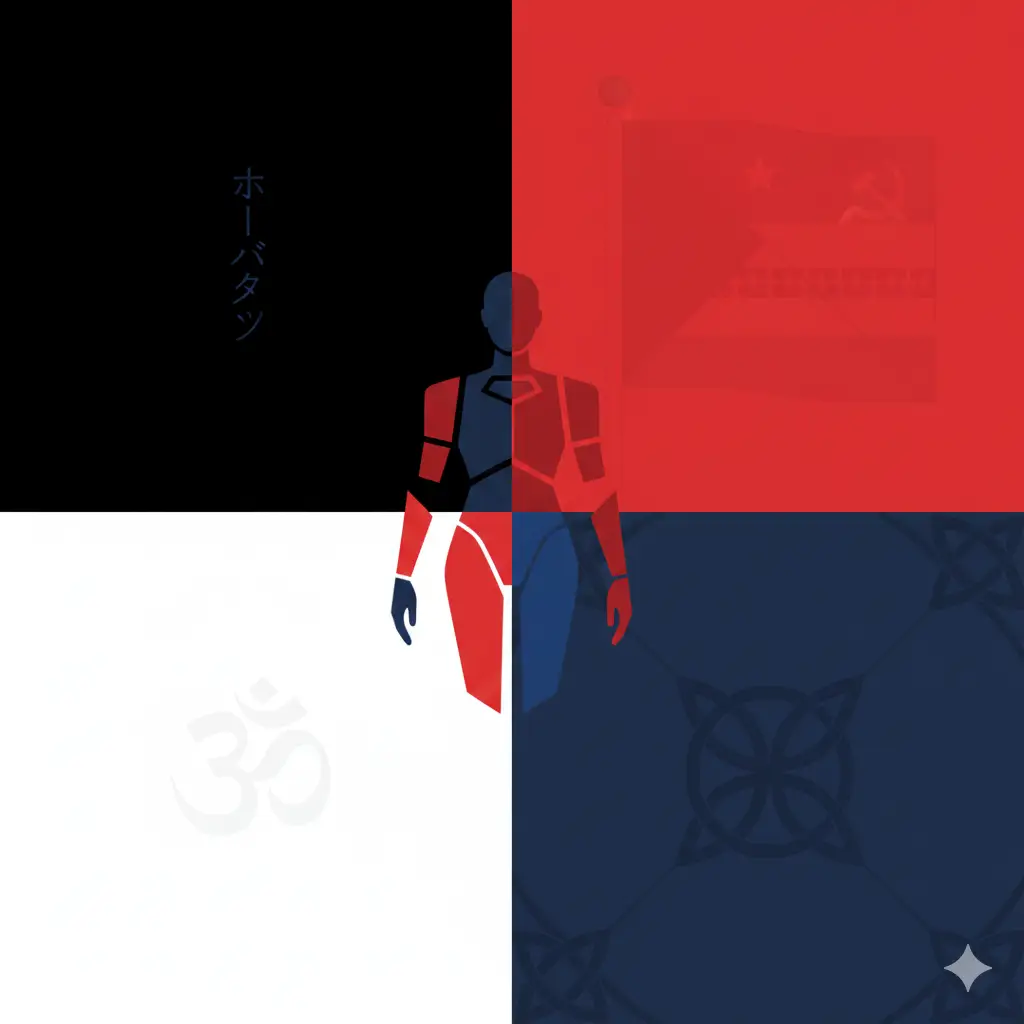
Be it a mourning widow wearing black or white, a national flag carrying pride, a young lover in red or a protester wearing a yellow jacket in solidarity. The task, the context, the symbolism signify the colour and vice-versa. And among all, four colors speak with unmatched authority. Black, Red, White, and Blue.
Black: The Knight’s Armor
As I’ve written before, black is the color of rebellion, power, mystery, and rebirth. It is the rose that blooms in shadow, signaling not fragility, but depth beyond sight. Like a knight’s plate, black shields the self while revealing vulnerability: “I am strong, but I am still human.” It is the end of one story, and the silent threshold of the next. Thinking of cultural contexts like funerals, formal evening occasions like black-tie galas or dinners and even in modern weddings, black leads the day.
Red: The Pulse Beneath the Skin
Red does not warn, it declares. It is blood before the wound, fire before the flame, desire before the touch. From the lips of sirens to the robes of revolutionaries, red says: “I am alive—and I will not be ignored.” In Tibet, monks wear crimson not for passion, but for awakened energy or the simplicity of a minimalist life. In revolution, red flags fly not for violence, but for the life that must be defended. And in love, red is not just seduction, it is sacrifice. Red is one color the human eye captures fast and remembers for long. It is not just the dominant colour palette on Valentines but even in more traditional Indian religious events such as Karwa Chauth.
White: The Silence That Judges
White is purity, but also sorrow and sadness. It is the bridal veil and the lab coat, the snow-covered field and the empty page. But beware: white is not innocent. It is the color of absolute judgment. In Japan, A white burial kimono (shinishozoku) is placed on the deceased body while the mourners used the same until the Meiji era where the Black color was adopted exclusively for mourners.
The same holds true in Sri Lanka where Buddhist funerals are totally dominated by white. From flags to banners to the mourners. In the West, white coats grant authority, but also distance. White demands: “Be clean. Be flawless. Be worthy.” It is the most forgiving color—and the cruelest.
For in its glare, every flaw is exposed. And yet, we keep returning to it. Because white is also the space before creation. The breath before the word. The chance to begin again.
Blue: The Depth That Conceals Power
Blue is the only color not found in the animal kingdom as pigment (except for the Obrina olivewing butterfly), yet it dominates our skies and seas. It is the color of trust, distance, melancholy, and command. Look at the Police uniforms, corporate logos, even UN peacekeepers. Blue says: “You can rely on me.” But beneath that calm lies cold calculation. Navy blue was once the uniform of many now-defunct empires. Royal blue stood for divine right. And the deepest indigo which traveled through the silk routes as Blue Gold which unfortunately fueled slave trade and colonisation. Yet remained the color of hidden knowledge,the robe of mystics, the ink of scribes, the night that cradles stars. Blue does not shout.It holds. And in its stillness, it gathers power.
The Human Warning System
We are not frogs or octopuses. But we, too, flash our colors, not to avoid predators, but to declare our truth, emotions and innerselves in a world that demands performance. Colours are not mere fashion choices, they are acts of sovereignty. In a fractured world, color is our silent covenant with the self. And in that covenant, we say.
“This is who I am.
This is what I protect.
This is what I will not surrender.”
— Dhanuka
Unseen Canvas: Where aesthetics meet ethics in the shadows.
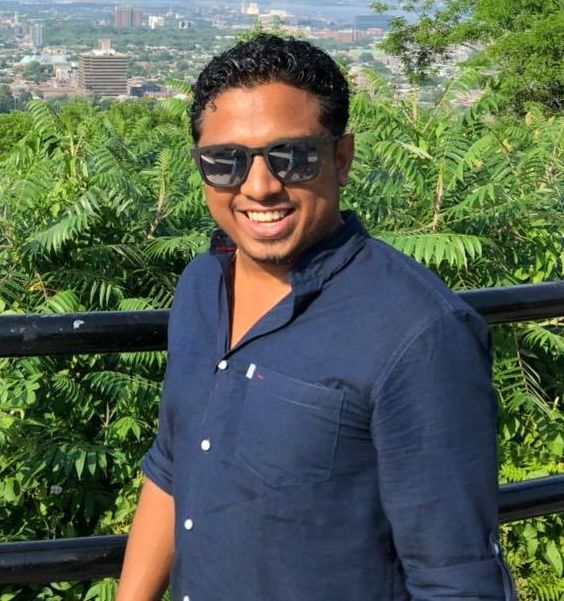
Dhanuka Dickwella is a distinguished Sri Lankan poet, author, and multifaceted professional whose work spans literature, geopolitics, and social activism. Holding a Master’s degree in International Relations, he has established himself as an expert in geopolitics and geoeconomics, fields that inform his analytical and creative endeavours.
His professional portfolio includes significant editorial and journalistic roles: he serves as the Executive Editor of The Asian Reviews magazine, a platform dedicated to bridging the literary worlds of East and West. Additionally, he contributes as a guest writer for the Chicago-based Armenian Mirror-Spectator, focusing on geopolitical issues in the Caucasus region, and as a columnist and guest speaker for Force, an Indian magazine addressing security and defense matters. Dickwella’s career in public service is equally notable. Dhanuka Dickwella is the Chief Coordinator for Canada for the Panorama International Literature Festival 2026. He has been actively involved in Sri Lankan politics, having served as a grassroots politician, political campaign director, and council member of a local government body in a rural Sri Lankan town. Prior to his political engagements, he founded and led a foundation dedicated to empowering youth and supporting underprivileged communities, reflecting his commitment to social equity. Currently, he advises youth groups on political activism and broader political trends, leveraging his extensive experience to foster the next generation of civic leaders. Beyond his analytical and political pursuits, Dickwella is a celebrated poet and blogger whose literary work explores the complexities of human emotion and experience. His debut poetry collection, Voices of Lust, Love and Other Things, showcases his ability to weave personal narrative with universal themes. An ardent climate and social activist, he champions sustainable development and social justice, driven by a vision of a better world for future generations. A proud Sri Lankan patriot, Dickwella is also a devoted father to his daughter, whose influence is a cornerstone of his personal and creative life. Dhanuka Dickwella’s diverse achievements reflect a rare synthesis of intellectual rigor, artistic expression, and civic dedication, positioning him as a prominent voice in both Sri Lankan and global contexts.
Leave a Reply