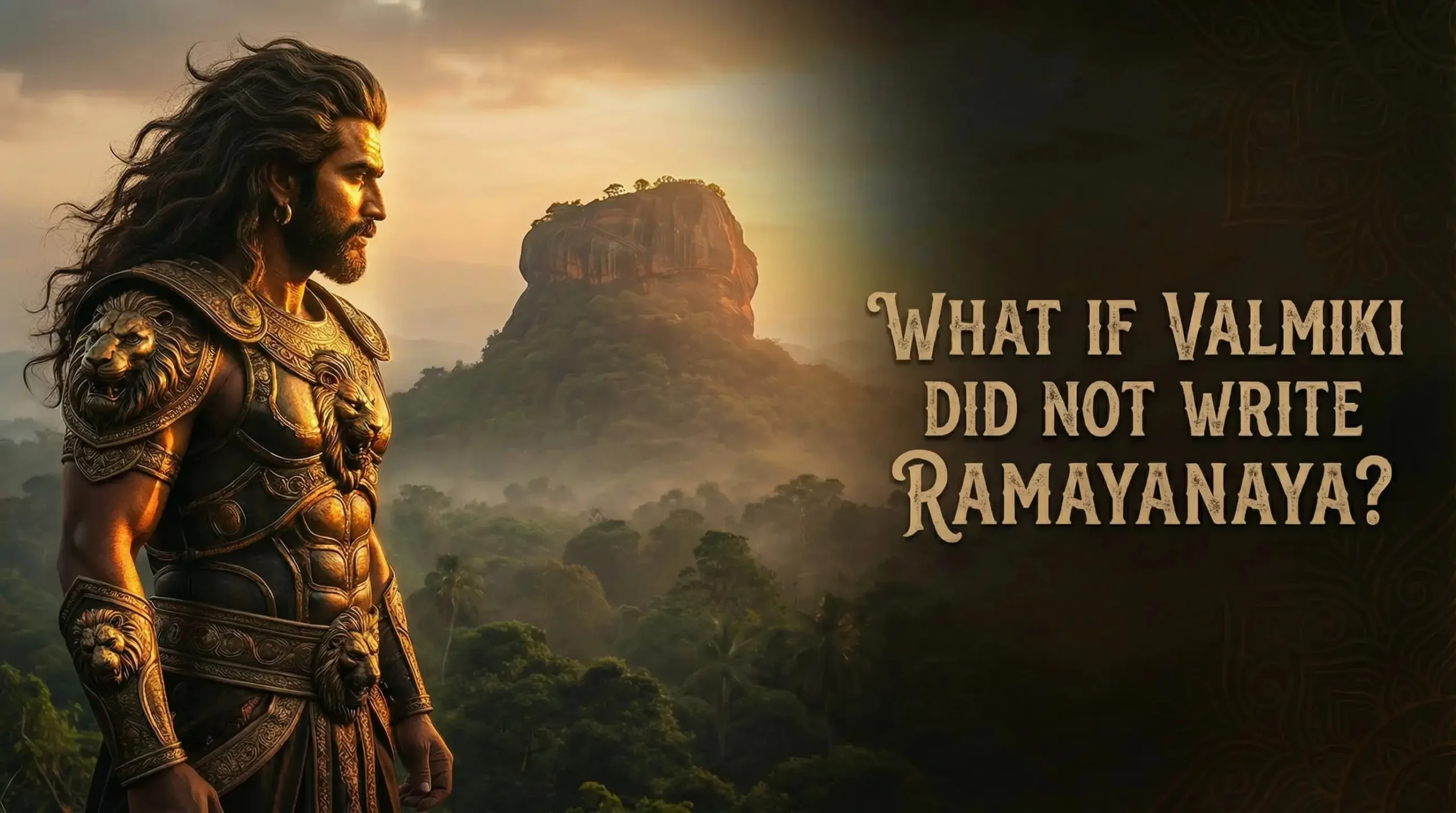
There is an old African proverb that I live by: “Until the lions have their own historians, the history of the hunt will always glorify the hunter.”
For millennia, the Indian subcontinent and, by extension, the world have viewed the Ramayana through a single lens: the poetic, Sanskrit verses of Valmiki. We have been conditioned to cheer for one camp and vilify the other. But as a Sri Lankan, I find myself standing on the shore of a different reality. What if the “villain” of the story was actually the protagonist of a history we’ve been forced to forget?
The Narrative Monopoly
Valmiki was a master storyteller, but he was also a biographer for the winning side. In his version, Ravana is a ten-headed demon. But in the modern Sri Lankan consciousness, an earthquake of narrative shift is happening. We are no longer content being a footnote in someone else’s epic. We are reclaiming King Ravana, not as a monster, but as a polymath, a physician, a musician, and a sovereign protector of this island and most importantly, a warrior of our nation.
If Valmiki hadn’t written the Ramayana, would we still be “cheering for the wrong camp”? Or would we see a story of a highly advanced civilisation protecting its borders?
The WMDs and Ancient Tech
If we strip away the religious lens,” the Ramayana reveals a terrifying, realistic foundation. I have often argued that we shouldn’t look at the Brahmastra or the Gandharvastra as magical spells, but as prehistoric technology.
If these were indeed “Psychotronic weapons” or ‘’tactical nukes’’, the narrative changes entirely. We aren’t looking at a battle of gods and demons; we are looking at a prehistoric global conflict. Consider the geography: if Ravana was merely a “tribal leader” on a small island, how did his sister Shurpanakha end up in Nashik, which is located in Maharashtra, India ? The logistics don’t add up unless you consider the existence of the Gondwana supercontinent or a civilisation with aerial capabilities that would make modern drones look like toys.
The Nuclear Severance
There is a logical, albeit haunting, theory: Was Sri Lanka’s physical separation from the Indian mainland a result of a prehistoric WMD? Was the “bridge” destroyed not by a monkey army, but by a catastrophic event that left a scar across the Palk Strait?
When I look at the rock formations and the “Adam’s Bridge,” I don’t just see myth. I see a testament to a scene of an ancient war that we have often misinterpreted.
Why This Matters Now
The internet generation in Sri Lanka is doing something the previous generations were too afraid to do: they are questioning the “Hunter’s” history. They are looking at Ravana as a badge of national identity, a man of science and sovereignty.
Is this “alternative history”? Perhaps. But in a world where history is written by the victors, seeking the “lion’s version” is the only way to find the truth. We are not just an island that was “conquered” by a prince from the north. We are the descendants of a civilisation that may have reached the stars before it was burned into the soil.
If Valmiki didn’t write the Ramayana, the world might have seen Sri Lanka not as a land of demons, but as the last stand of an intellectual superpower.
It’s time we started writing our own chapters.
“I have just released a deep-dive video on this topic where I explore the geographic and technical ‘Steel’ behind these theories. Watch the full episode of Silk and Steel below. .
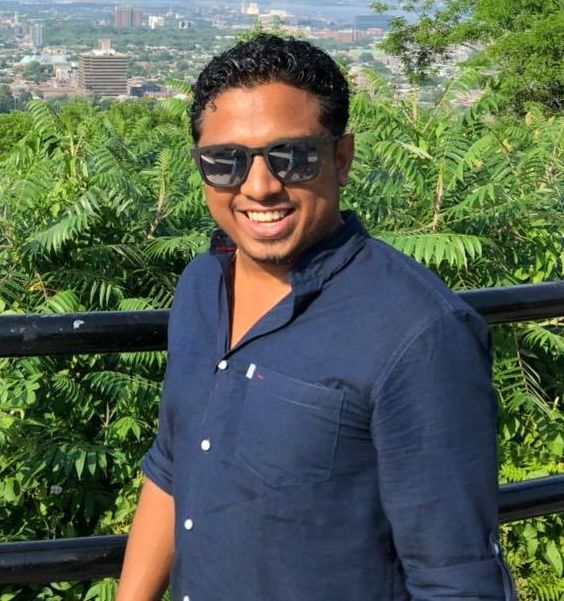
Dhanuka Dickwella is a distinguished Sri Lankan poet, author, and multifaceted professional whose work spans literature, geopolitics, and social activism. Holding a Master’s degree in International Relations, he has established himself as an expert in geopolitics and geoeconomics, fields that inform his analytical and creative endeavours.
His professional portfolio includes significant editorial and journalistic roles: he serves as the Executive Editor of The Asian Reviews magazine, a platform dedicated to bridging the literary worlds of East and West. Additionally, he contributes as a guest writer for the Chicago-based Armenian Mirror-Spectator, focusing on geopolitical issues in the Caucasus region, and as a columnist and guest speaker for Force, an Indian magazine addressing security and defense matters. Dickwella’s career in public service is equally notable. Dhanuka Dickwella is the Chief Coordinator for Canada for the Panorama International Literature Festival 2026. He has been actively involved in Sri Lankan politics, having served as a grassroots politician, political campaign director, and council member of a local government body in a rural Sri Lankan town. Prior to his political engagements, he founded and led a foundation dedicated to empowering youth and supporting underprivileged communities, reflecting his commitment to social equity. Currently, he advises youth groups on political activism and broader political trends, leveraging his extensive experience to foster the next generation of civic leaders. Beyond his analytical and political pursuits, Dickwella is a celebrated poet and blogger whose literary work explores the complexities of human emotion and experience. His debut poetry collection, Voices of Lust, Love and Other Things, showcases his ability to weave personal narrative with universal themes. An ardent climate and social activist, he champions sustainable development and social justice, driven by a vision of a better world for future generations. A proud Sri Lankan patriot, Dickwella is also a devoted father to his daughter, whose influence is a cornerstone of his personal and creative life. Dhanuka Dickwella’s diverse achievements reflect a rare synthesis of intellectual rigor, artistic expression, and civic dedication, positioning him as a prominent voice in both Sri Lankan and global contexts.
Leave a Reply