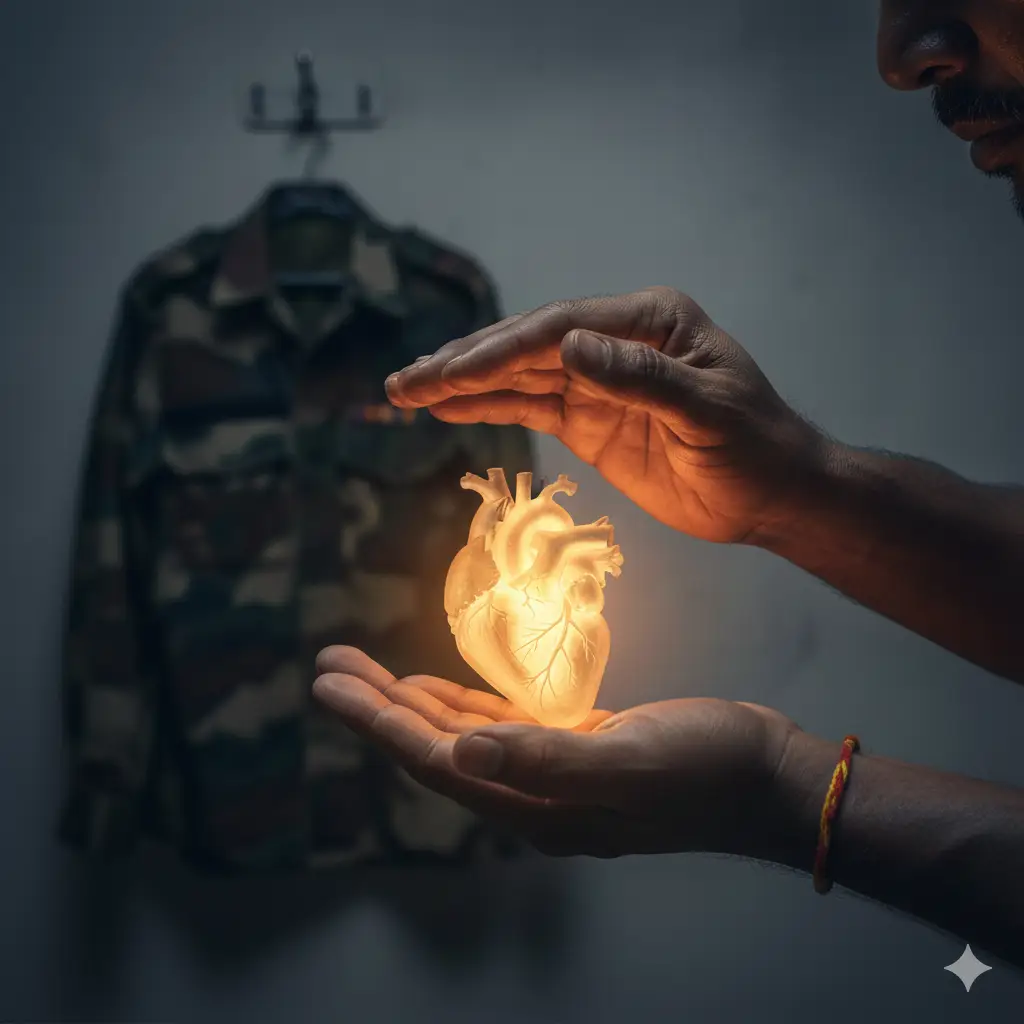
Are they though?
The traditional architecture of masculinity is built like a fortress, imposing, cold, and designed for war. In our corner of the world, patriarchy didn’t just demand that men be strong; it demanded they be hollow. We were taught that the ribcage was a cage for a reason: to keep the heart locked away lest it “embarrass” the man with its rhythmic, sentimental thumping.
We have been taught to see men through the barrel of a gun
In this part of the world, in Sri Lanka, across South Asia, in the echoes of colonial discipline and post-war trauma, masculinity was never about feeling. It was about endurance without expression, strength without softness, presence without pain. A real man, they said, does not cry. He does not tremble. He does not whisper “I’m afraid,” or “I miss her,” or “I don’t know what to do.”
Growing up, we were fed a diet of steel. The icons of our youth were the “immortal superior creatures, men who could walk through a hail of bullets without flinching, who took beatings as if they were merely rain, and who considered a sob to be a stain on their honor. In this world, a man’s value was measured by his capacity to absorb pain and his refusal to reflect it. We were raised to believe that Stoicism was the only acceptable dialect of masculinity. If a man felt fear, he hid it. If he felt grief, he choked it down until it became a stone in his gut.
To show sentiment was to be weak.
To shed tears was to be degenerate.
To need comfort was to fail the very definition of manhood.
And so, generation after generation, boys were raised not as whole humans, but as soldiers in waiting, trained to suppress, to harden, to armor their hearts beneath layers of silence.
Our stories reflected and reinforced this lie across all spectrums. In films, folklore, political rhetoric, and corporate cultures, men were often cast as immortal titans: the warrior who slays dragons, the father who never falters, the son who carries the family name like a sword. They took bullets in the chest and walked away without flinching. They buried their mothers in the morning and led meetings by noon. They never broke. Never blinked. Never bled inwardly. For the most part, our billboards featured gun-blazing, heroic men.
But here is the truth no one dared speak: Men have always been as emotional as women.
There is no school of thought other than in patriarchal societies to say emotion belongs to one gender, to women specifically. Emotions are equally human. A man’s heart beat just as fast in fear. His skin is just as soft beneath calloused hands. His eyes well up just as easily at the sound of a lullaby, the scent of rain on dry earth, the memory of a father’s last handshake.
The Secret Parallel Universe
However, a parallel universe exists, hidden behind the closed doors of our homes and the quiet corners of our minds. It could transpire at 3 a.m. in a Colombo flat, on a bus heading home from a factory shift, in the quiet aftermath of a divorce. In this universe, the “heartless moron” is a myth. Here, men are as fluid and fragile as the women they are told they must “protect.”
When the world isn’t looking, men are:
Sobbing, silently. Into pillows. Into steering wheels. Into the folds of a child’s school uniform, they haven’t washed because it still smells like her.
They are the Guardians of Tenderness: A father’s hand, calloused from the rice field or the factory, becomes a soft cradle for a sleeping child.
They are silent Mourners: A man may not wail at a funeral, but his grief is a tectonic shift, quiet, deep, and capable of breaking his foundation.
They are seekers of shelter: Behind the bravado is a being that desperately wants to be told, “It is okay to be tired. You do not have to carry the world today.”
They feel grief so deep it hollows their ribs. They carry love so fierce it terrifies them. They ache with loneliness they were never taught to name.
Yet society offers them no language for this inner life. No ritual for release. No peace of mind nor healing. No permission to say: “I am tired. I am lost. I need to be held.”
Instead, their pain is redirected into anger, into alcohol, into silence so thick it becomes a tomb. Or worse, into violence: against others, against themselves. Because when tenderness is forbidden, only destruction feels like power.
But what if we dared to imagine another way?
What if we taught our sons that courage includes crying? That strength includes saying “I can’t”? That real manhood is not the absence of feeling, but the honesty to feel fully?
Imagine a world where a father hugs his son and whispers, “It’s okay to be sad,” instead of “Don’t be a girl.” Where a husband can say to his wife, “Today broke me,” without fearing she’ll think less of him. Where a veteran doesn’t hide his PTSD behind a stiff drink, but speaks it aloud, and is met with care, not contempt.
This is not a weakness. This is revolution. For too long, we’ve equated masculinity with invincibility. But true strength lies in vulnerability, in the willingness to stand naked before life, heart exposed, and say: “This is me. All of me.” We must realize that the same skin that can withstand a beating is the same skin that craves a touch. The same eyes that scout for villains are the same eyes that overflow when a mission is finally accomplished, not a mission of war, but a mission of love.
“We called them morons because we could not hear their silence, but it is the system that is foolish, not the hearts it tried to break.”
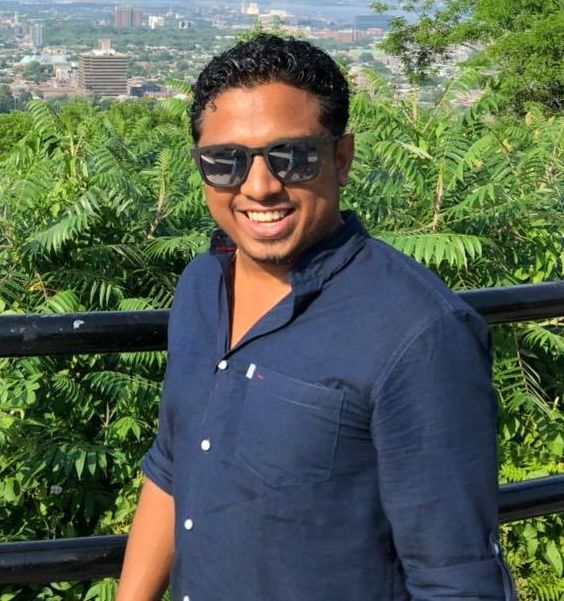
Dhanuka Dickwella is a distinguished Sri Lankan poet, author, and multifaceted professional whose work spans literature, geopolitics, and social activism. Holding a Master’s degree in International Relations, he has established himself as an expert in geopolitics and geoeconomics, fields that inform his analytical and creative endeavours.
His professional portfolio includes significant editorial and journalistic roles: he serves as the Executive Editor of The Asian Reviews magazine, a platform dedicated to bridging the literary worlds of East and West. Additionally, he contributes as a guest writer for the Chicago-based Armenian Mirror-Spectator, focusing on geopolitical issues in the Caucasus region, and as a columnist and guest speaker for Force, an Indian magazine addressing security and defense matters. Dickwella’s career in public service is equally notable. Dhanuka Dickwella is the Chief Coordinator for Canada for the Panorama International Literature Festival 2026. He has been actively involved in Sri Lankan politics, having served as a grassroots politician, political campaign director, and council member of a local government body in a rural Sri Lankan town. Prior to his political engagements, he founded and led a foundation dedicated to empowering youth and supporting underprivileged communities, reflecting his commitment to social equity. Currently, he advises youth groups on political activism and broader political trends, leveraging his extensive experience to foster the next generation of civic leaders. Beyond his analytical and political pursuits, Dickwella is a celebrated poet and blogger whose literary work explores the complexities of human emotion and experience. His debut poetry collection, Voices of Lust, Love and Other Things, showcases his ability to weave personal narrative with universal themes. An ardent climate and social activist, he champions sustainable development and social justice, driven by a vision of a better world for future generations. A proud Sri Lankan patriot, Dickwella is also a devoted father to his daughter, whose influence is a cornerstone of his personal and creative life. Dhanuka Dickwella’s diverse achievements reflect a rare synthesis of intellectual rigor, artistic expression, and civic dedication, positioning him as a prominent voice in both Sri Lankan and global contexts.
Leave a Reply