
“Enemy-occupied territory—that is what this world is.” C.S. Lewis
This quote is from C.S. Lewis’s famed book, Mere Christianity. Although Lewis had a religious mission in penning these words, it is by and large the most brutally honest attribute one could apply to a fundamental human trait: territoriality.
Territoriality is all about raw power. All of us were once part of a very long food chain—a hierarchy of blood and bone where the predatory, the savage, and the ruthless, mighty beings got what they wanted unchallenged. The weaker, the subtle, and the innocent were left with only the scraps. This cold reality has existed from the moment we left the jungles and created this fragile cocoon called civilization. Instead of leaving our instincts behind in the wild, we crafted a social structure that adopted and integrated territoriality as its foundational pillar.
People talk about territoriality by always quoting the animal kingdom. They speak of the hippos who go cuckoo, turning into engines of destruction if another hippo, a gator, or a fisherman’s boat makes the slightest incursion into their waters. We point to our dogs, who mark their area with a primal signature. We romanticize the “fencing duels” of Northern Flickers as a “flicker dance” in their quest for territory. We observe the fight-to-the-death battles of Siamese fighting fish, or Bettas, aggressively defending their waters.
Yet, surprisingly, none of those species qualifies for the top rung of the ladder in the game of territoriality. That medal belongs to us – humans. We are the biggest, most obsessive territorial creatures ever to roam the earth. For us, it is not merely about survival; it is about pure power and the intoxicating sense of victory and achievement.
We do not only fiercely defend the grand borders of nations; that is a common misconception. We fight for the trivial. We wage war for a traffic lane, a window seat in an airplane, a place in the bread queue, or even the side of the bed where we sleep. For us humans, it does not matter with whom we have to put up a fight. The target is irrelevant. It could be your neighbor, the driver trying to overtake your place in the lane, or your wife who happens to want to sleep on your usual side of the bed. Our fight goes on nonetheless.
We go to war on any of these occasions because the “cocoon” of civilization has not dampened our instinct to dominate—not a bit. On the contrary, it has only given us more things to claim. We can forgive the hippos, for they have no civilization, no culture, no education, or religion to guide them. They have neither self-help books nor a dozen influencers, gurus, healers, or personal coaches. They are honest in their savagery, are they not?
But us? We possess the light of knowledge and the warmth of healing. We have a sense of what is right and wrong. We have the guidance of ethics, the touch of empathy, and the need for coexistence. Yet, we choose to use our minds to sharpen our claws and identify the next possible space to conquer. We claim to be enlightened, yet we are the only species that brings the ferocity of the jungle into the sanctity of the home.
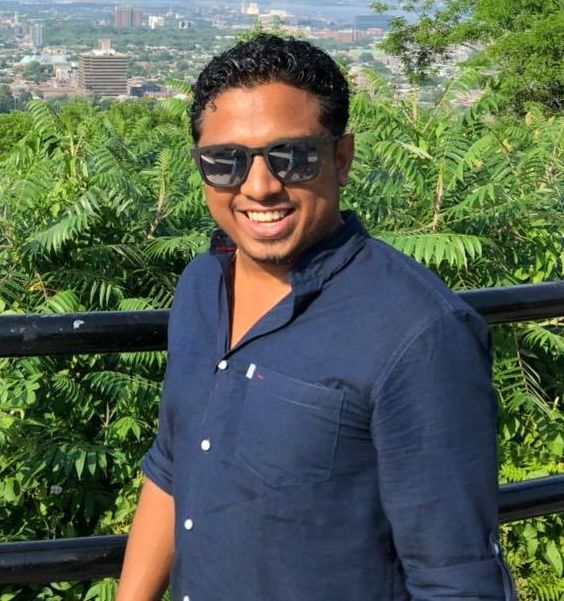
Dhanuka Dickwella is a distinguished Sri Lankan poet, author, and multifaceted professional whose work spans literature, geopolitics, and social activism. Holding a Master’s degree in International Relations, he has established himself as an expert in geopolitics and geoeconomics, fields that inform his analytical and creative endeavours.
His professional portfolio includes significant editorial and journalistic roles: he serves as the Executive Editor of The Asian Reviews magazine, a platform dedicated to bridging the literary worlds of East and West. Additionally, he contributes as a guest writer for the Chicago-based Armenian Mirror-Spectator, focusing on geopolitical issues in the Caucasus region, and as a columnist and guest speaker for Force, an Indian magazine addressing security and defense matters. Dickwella’s career in public service is equally notable. Dhanuka Dickwella is the Chief Coordinator for Canada for the Panorama International Literature Festival 2026. He has been actively involved in Sri Lankan politics, having served as a grassroots politician, political campaign director, and council member of a local government body in a rural Sri Lankan town. Prior to his political engagements, he founded and led a foundation dedicated to empowering youth and supporting underprivileged communities, reflecting his commitment to social equity. Currently, he advises youth groups on political activism and broader political trends, leveraging his extensive experience to foster the next generation of civic leaders. Beyond his analytical and political pursuits, Dickwella is a celebrated poet and blogger whose literary work explores the complexities of human emotion and experience. His debut poetry collection, Voices of Lust, Love and Other Things, showcases his ability to weave personal narrative with universal themes. An ardent climate and social activist, he champions sustainable development and social justice, driven by a vision of a better world for future generations. A proud Sri Lankan patriot, Dickwella is also a devoted father to his daughter, whose influence is a cornerstone of his personal and creative life. Dhanuka Dickwella’s diverse achievements reflect a rare synthesis of intellectual rigor, artistic expression, and civic dedication, positioning him as a prominent voice in both Sri Lankan and global contexts.
Leave a Reply