Why is Human Survival an “Optional Extra”?
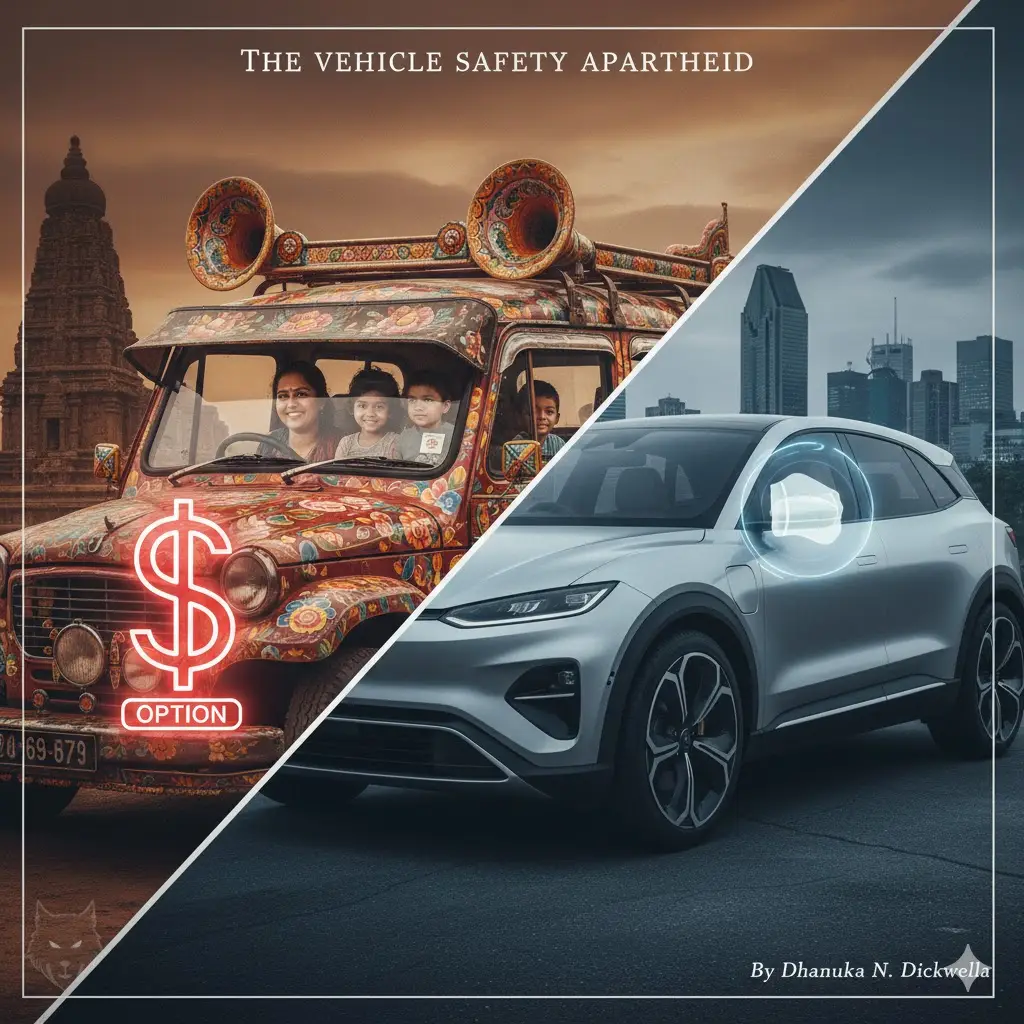
In the collective West, a car is a depreciating tool, a machine destined for a scrap heap the moment it leaves the lot. Whereas in the Global South, and specifically in my homeland of Sri Lanka, a vehicle is an appreciating legacy. Often, the single most expensive merchandise a middle-class household will acquire in a lifetime, probably due to the vehicle taxation, which is destined to discourage the importation factor, making their price ridiculously expensive. At the end, it becomes a member of the family that we polish like jewels, treat with a reverence that borders on the sacred.
The younger generations, driven by a desire for distinction, spend fortunes on “fancy options.” They add sun visors, wind-cutters, improvised silencers, thunderous sound systems,colored stickers, and whatever they see in Hollywood car craze. They dress the machine in the costume of luxury. Yet, beneath the chrome and the modified horns lies a hollow betrayal. While the “look” of the vehicle is upgraded to match a la mode, the one factor that determines the survival of its passengers ‘Security’ remains a locked gate. A whole industry of vehicle modification is well established, yet none of them are able to upgrade the security options of the vehicle that comes by default as a factory-fitted.
The commodification of the Airbag
We must ask a question that the Auto-Goliaths have suppressed since Mr. Daimler rolled out the first automobile: By what right does a corporation decide that the safety of a human being is an optional feature?
In the Asian market, passenger security is sold as a luxury. For years, we accepted a reality where only the driver was “worthy” of protection. If you want to save the passenger in the front seat, who may be your mother, wife, or child, you must pay an extra premium. If you want protection from a side impact, you must open your wallet wider. What a terrible criminal scam.
This is not “market segmentation.” This is Corporate Colonialism driven by pure greed, seeing a car buyer as no more than a wallet to rob. The leading car companies are playing a God-like game with the most basic element on earth: human life, of yours and mine, without a single repercussion or push back. Let’s agree that adding airbags has an impact on cost, perhaps even marginally. But what is the ethic of the dwindling profit margin in dictating survival?
Why are cooperatives exempt from providing basic security of the right to live to everyone hailing a vehicle without exception? Even in the darkest scenarios of international warfare, the lives of civilians are enshrined in treaties as a priority. You cannot legally strike a village to kill one enemy. Yet, in the theater of global commerce, auto-makers are allowed to strike at the lives of the poor by withholding life-saving technology. Where is the Hague for the engineers of “Safety Apartheid”?
The Geography of Discarded Lives
The most staggering evidence of this criminal behavior is the regional divide. In the Francophone Quebec or the English-speaking rest of the West, safety standards are non-negotiable. For that matter, in any high-income country, security is the name of the game. But in Asia, Africa, and South America, the “Value of Life” is adjusted for inflation.
Is a mother in Colombo less prone to injury than a mother in Montreal? Does a child in Nairobi bleed differently from a child in Paris? Does a cab driver in Maharashtra, India, have less right to live compared to a Yellow cab driver of New York? Of course not. This is sheer discrimination, a calculated decision that non-Western lives are a secondary concern in the pursuit of a profit margin.
The marketing teams of these giants perform a “well-crafted twisty manipulation.” They distract the buyer with seat comfort, softness of the leather, paint colors, and immersive screens, making the guarantee of survival seem like a boring, technical footnote. Yet the versions with security are doubled in price, or simply a price not worth paying for an extra Aibag. They sell the “fizzing sizzle” to hide the fact that the “steak” is poisoned.
A UN Mandate for Global Passenger Safety
What surprises me, and what should outrage you, is how we have let this go unpunished for over a century. Safety must never be a “half-baked” option limited to a region, a nation, or two. It must be an optimal mandate, a fundamental right for any driver or passenger in an automobile. We do not need more “market choices.” We need Global Safety Sovereignty. Just as we fight for free education as the central nervous system of a society, we must fight for a UN mandate that forces auto-makers to adhere to a universal standard of life preservation. Making safety optional should be recognised as institutional discrimination and a crime.
The era of selling survival to the highest bidder must end and end for good. Security should not be an “option” any more than breathing is an option. It is time to stop the “Safety Apartheid” and demand that every life, on every road, in every corner of the world, is treated with the same non-negotiable dignity.
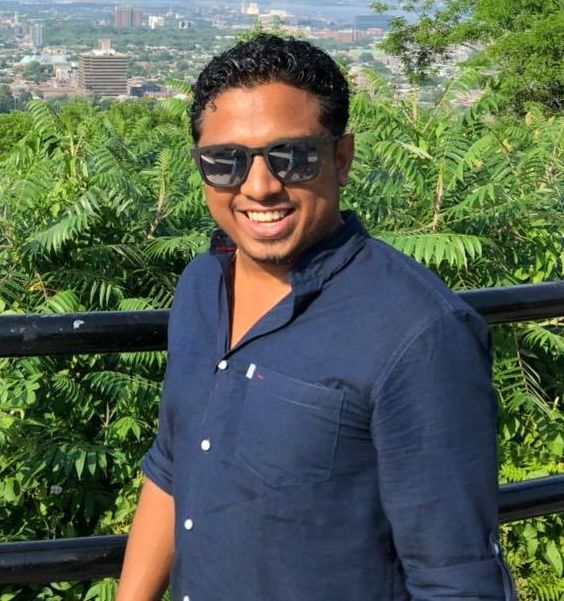
Dhanuka Dickwella is a distinguished Sri Lankan poet, author, and multifaceted professional whose work spans literature, geopolitics, and social activism. Holding a Master’s degree in International Relations, he has established himself as an expert in geopolitics and geoeconomics, fields that inform his analytical and creative endeavours.
His professional portfolio includes significant editorial and journalistic roles: he serves as the Executive Editor of The Asian Reviews magazine, a platform dedicated to bridging the literary worlds of East and West. Additionally, he contributes as a guest writer for the Chicago-based Armenian Mirror-Spectator, focusing on geopolitical issues in the Caucasus region, and as a columnist and guest speaker for Force, an Indian magazine addressing security and defense matters. Dickwella’s career in public service is equally notable. Dhanuka Dickwella is the Chief Coordinator for Canada for the Panorama International Literature Festival 2026. He has been actively involved in Sri Lankan politics, having served as a grassroots politician, political campaign director, and council member of a local government body in a rural Sri Lankan town. Prior to his political engagements, he founded and led a foundation dedicated to empowering youth and supporting underprivileged communities, reflecting his commitment to social equity. Currently, he advises youth groups on political activism and broader political trends, leveraging his extensive experience to foster the next generation of civic leaders. Beyond his analytical and political pursuits, Dickwella is a celebrated poet and blogger whose literary work explores the complexities of human emotion and experience. His debut poetry collection, Voices of Lust, Love and Other Things, showcases his ability to weave personal narrative with universal themes. An ardent climate and social activist, he champions sustainable development and social justice, driven by a vision of a better world for future generations. A proud Sri Lankan patriot, Dickwella is also a devoted father to his daughter, whose influence is a cornerstone of his personal and creative life. Dhanuka Dickwella’s diverse achievements reflect a rare synthesis of intellectual rigor, artistic expression, and civic dedication, positioning him as a prominent voice in both Sri Lankan and global contexts.
Leave a Reply