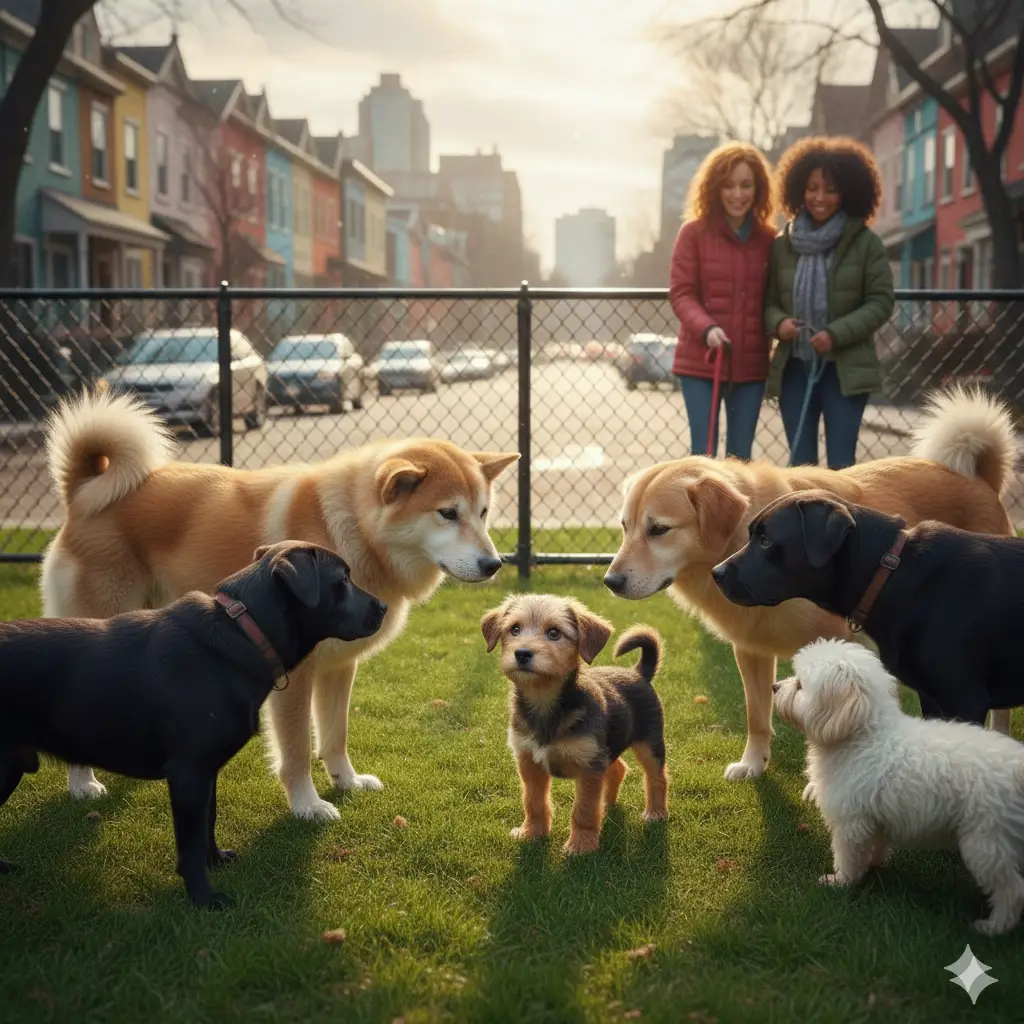
His days of starvation, getting wet in the pouring rain, harassment from rude cats, tick bites, and the growling of alpha dogs were all behind him. After a very long voyage, he finally came to the beautiful city of Montreal.
If the concept of Heaven were real, Montreal was absolutely a Dog’s Heaven. For any pet, for that matter. It was not just the people of Montreal who enjoyed human rights, but the animals had their rights well-protected. In Sri Lanka, human rights were something considered a luxury that the government-owned, the rich enjoyed, and the weak did not know existed. Usually, the government was the only party that decided how much of it would be allocated to its people. Just like the alpha dogs on the streets, some people enjoyed every right, including the right to speak, since they were richer than the rich.
Montreal had loads and loads of dogs. Thousands of them. Every breed that was ever bred was in Montreal. They lived with very high standards compared to, for example, a dog in Sri Lanka. The dogs in Montreal ate proper dog food, served in a fancy bowl at regular intervals, wearing a high-tech collar. They were given baths using Dog shampoos, got dried using those machines, and even their nails were cut. They had names, celebrated birthdays, went for walks, saw a veterinarian, were given vitamins and medicine, and even went on Instagram while those Sri Lankan dogs were crushed by a speeding Indian-made Leyland bus. Their owners took them for walks, shows, and even for therapy. But there was a fundamental difference between Sri Lankan dogs and the ones in Montreal. The Paraya dogs were totally free to roam around the cities and villages, whereas the ones in Montreal had to be confined to their houses, which were not so big. Even in their dog park, they had to run inside a fenced area. The pet owners of Montreal were lovely people. They had no choice but to adapt to a Metro city’s pet lifestyle, like anywhere in the world.
Parallel to the busy Papineau Street, there was a dog park surrounded by a fence. Petit Bouton, the young Sri Lankan street dog recently adopted in Montreal, used to go there every other day during the evenings ever since he arrived in the city. He still remembered his first visit. His new owners, Natalie and Geneve, walked him until the crossing near the Gauthier street lights. They were waiting for the light to turn red to cross the road to reach the park. Petit Bouton felt very nervous seeing the speeding vehicles passing him on Papineau Street. He remembered how his mom died in agony, and her last painful scream started to echo in his ears. He panicked, cried, and tried to run away when they were about to cross the road. Seeing the stress their lovely puppy was feeling, Geneve carried him and hugged him with her arms around. He felt safe and warm and kept his head on her shoulder.
“Oh, look, he is hugging me, my sweet baby,” Geneve said in a tone melting any heart. Hearing this, Nathalie slowly started to feel his head. Once Bouton felt at ease and comfortable, they put him back on his feet. They walked until the section designated for dogs. A fenced area with grass and a few obstacles that the dogs could use for activities.
“ Oh, your mom looks so kind,’ said the first little puppy who approached Button to sniff him.
“ She is not my mom. My mom was killed in a bus accident.”
Button said in a sad voice. The little dog gave him a dog hug.
“ My name is Buki-Duki. I am so sorry about your real mom. I was talking about your other mom. You must be new to Montreal.”
Bouton never had a friend in his entire life, which was quite short until now. He was still a puppy. The only friend he had was the old dog who kept him safe, provided company, and even taught him some valuable tricks. Anyway, he could never had a fancy Chihuahua as a friend ever in Sri Lanka. Those imported dog breeds did not associate with the local Paraya dogs at all. They lived in two entirely different universes. But Montreal seemed to be a different place after all. Whether you are a Paraya from Sri Lanka, a German shepherd, an American Chesapeake Bay, a Norwegian Halden hound, a Japanese Shikoku Ken, English Airedale Terrier, everyone was welcome in this park dedicated to dogs. There was no difference. What a strange world indeed.
Petit Bouton did not know how to react to a friend, but since dogs are naturally friendly animals, he sniffed back Buki Duki and said hello. As he was still confused about what Buki-Duki told regarding “ a mom and real mom, he decided to ask a question.
“Hello, Buki-Duki. I am Petit Buton. I was born in a country called Sri Lanka. Ahem. Maybe you have never heard of it. A small island in the Indian Ocean.”
“Nice to meet you, Buton. Well, you are right, I have not come across any puppy or a grown-up from Sri Lanka. Anyways, we are in Plateau Montreal. The heart of the French. You are probably the only Sri Lankan puppy around here.”
“That is what I thought. Ahem. I have a question, if you may help me find an answer.”
“Please feel free, Buton. I will also introduce you to other friends after.”
“You said about a real mom and another mom. What did you mean?”
Buki-Duki felt sad for the little puppy. He probably had no parents to tell him about a dog’s life in North America; otherwise, what kind of dog did not understand this simple fact?
“Well, the real mom is, of course, the one who gave birth to us. The other mom is the human one who adopts us and looks after us like their own kids. Some have dads, too. But you seem to be having a two-mom family. “
“Oh, now I get it. Yes, I have two wonderful moms.” Bouton said, giggling. It was the first time he freely giggled.
“Do lots of dogs die here by accident on the road ?” Bouton asked his next question.
“Never, never. It is unheard of. The streets here are safe. Even dogs are considered lives worth saving.” Said Buki-Duki.
“Oh, that is such a relief. I was very scared of buses. But glad that there was not a single Leyland or tuk-tuk”
Buki-Duki had never heard of such brands or vehicles of that type.
“ We have STM buses. They are really safe. I don’t know what you mean by a Tuk Tuk or a Leyland. But it sounds like a very dangerous vehicle for dogs. Lucky for you, we do not have that here. Come Bouton. Let’s talk to other friends.” Buki-Duki led the Sri Lankan puppy towards the place where the dogs were chasing a ball.
“Look at our cutie. Already made a girlfriend. Such a charmer he is,” Geneve told Nathalie. Hearing that Natahalie hugged her lover and said
“Surely a charmer. Just like you.”
Bouton was a little shy as he approached the herd. There were very big dogs, and he was scared that they would harm him. But Buki-Duki walked so confidently towards the group, giving him a real assurance.
“Gather around everyone. Meet our newest friend from Sri Lanka, Petit Bouton.”
Dogs in the park were well-trained and domesticated. They were not aggressive but very empathetic, just like their owners. The dogs came to inspect this strange-looking puppy from the strange land. They sniffed him, patted him, and even hugged him. Button felt welcome and very safe among his new friends. A Japanese Shiba Inu dog, who was known as ‘Kai-Kai,’ was the first to interact with little Bouton. He was an old, wise, very calm dog, although his ancestors were trained for hunting expeditions. Kai Kai did not even chase a nasty squirrel, let alone engage in any meaningful hunting.
“What is life like for a Dog in your home country, little one ?”
This was a moment where Petit Bouton wanted to thank the old dog who kind of raised him for a while back home. Thanks to him, Buton knew exactly what to say.
“ Dogs in Montreal live a much better life than humans in Sri Lanka. You could imagine how it could be for a dog, I think. But those humans somehow find a way to help us, too.”
When Buton started his life story back home, the dogs in the park were so shocked. They have never heard of such things. Even the TVs the humans watched never showed anything closer to what Petit Bouton described. He went on to talk about life on the streets, accidents, fights, food scavenging, school children who shared their meals, poor Hussain who shared his milk powder, the monks in the temple who would give all the leftover food to dogs around, the stories about some fancy dogs living heaven like lives in unknown locations, how people treat dogs and so many stories. This storytelling went on for days every time Bouton visited the park.
Every dog, from puppies to old ones, loved Petit Bouton for his wonderful ability in storytelling as well as those stories, which sounded like tales from a magical land. They soon started to call him ‘The Wizard of Sri Lanka’. There was no end to this storytelling. Bouton knew so much for his little age, and every story he narrated was totally unreal for the dogs in Montreal. Their understanding of Sri Lanka had a few basic premises after a while. ‘Even in Sri Lanka, the cats were nasty and opportunistic, humans were lovely even though they were poor, Leyland bus drivers were the messengers of death, being a street dog was adventurous until it was not, a dog’s freedom had a very huge cost, two mommy families did not exist in Sri Lanka.
One day, the wise Kai-Kai asked Buton.
“Are you so happy about your new life filled with love, care, friends, safety, and all the new changes?”
Bouton looked at the nearby trees. He saw how the squirrels were running riot while a few Geese flew over them. Then he looked at the fence and the wonderful people around it holding various dog leashes. Suddenly, he remembered the old dog and his walks with him on the streets in Sri Lanka. He looked at Buki-Duki, who was playing with another dog and his two moms, and thought about an answer to the question.
He remembered what the old dog used to tell him like a Mantra, almost every night before falling asleep.
“You know, Bouton Nose, there are three things more important than anything in a Paraya dog’s life. Freedom, Friends, and Family.”
Buton did not agree with this argument wholeheartedly at the time. He knew family was important since the memory of his mom and siblings would bring him so much pain. Friends meh. He could not make friends with any of the neighborhood cats, and those alpha dogs didn’t even notice he existed. Pigeons hated his ‘chase-and-catch-you’ game. Freedom was a word he could not quite understand for his age. At the time, some warm milk, a bone, and rice mixed with chicken gravy were more important than anything else. Looking back, Bouton tried to recall the old dog’s argument. He realized that each of his siblings had their own family where a human was involved. In other words, he, too, had one of the loveliest families in Montreal. He had so many great friends who were very fond of him, including Roxy, Bijou, Bonbon, Claude, Fleur, and tens of other dogs and puppies whose names he could not memorize. Associating such expensive dog breeds would not been even a remote possibility for a Paraya dog in Sri Lanka, even if he was born in a house belonging to an old aristocratic family. Not just his moms but the moms and dads of other dogs liked this strange Bouton. Nobody cared about his breed. He was just another lovely dog after all. He had everything a dog needs, from toys to grooming tools to a bed to a plate to his own veterinary and even a Dog behaviorist. Those were not even the remote possibilities in Sri Lanka for a dog like him. So he was so happy, but the fence around the small ground confused his little mind. Was his freedom limited to the ground, or was there a different freedom beyond the fence?
His little mind suddenly got struck by an idea fueled by an adrenaline rush and perhaps by something unknown that only those dogs from the Island nation inherited. “I could even invite Buki-Duki, our friend’s first thought. But he had to know something before thinking of his idea any further.
“Hey Kai-Kai, do the dogs live on the streets here or in other burrows?” He asked the old friend without answering his question.
“No living thing can survive the winter, Bouton. Unless you are a squirrel, beaver, groundhog, or skunk born here, no animal can live outside. We dogs will freeze to death. But of course, the Siberian Huskies, Alaskan Malamutes, and Saint Bernards, which have thick fur and body fat, can do that. Even though they stay in houses during winter in Montreal.”
“ Who is winter?”
Buton realized that something or someone way more powerful and destructive than the Leyland buses was roaming in this beautiful city. That was sad news, unbelievably tragic.
The question sounded funny enough that Kai-Kai could not stop laughing. But seeing the naive and innocent nature of the question, he patted the little puppy and said.
“Winter is not a living thing, Bouton. Perhaps in books, humans write. Winter is another powerful season that changes the temperature and life outside. It becomes so cold that we animals are unable to support ourselves. Especially a puppy born in a tropical country. You will need to stay inside for those couple of months. But I am sure your moms would dress you in warm clothes and bring you for walks, since it is also a beautiful thing to see the snow.”
It did not matter what or who this winter was for Petit Bouton any longer. It meant danger and perhaps even terrible death. But he was pleased to hear that there was some beauty in it. He thanked his wise and senior friend and went in search of Buki-Duki with no answer to his question. Petit Bouton was determined to live past this winter and whatever challenges the streets of Montreal might suddenly bring. He remembered one important thing. After all, he was a Paraya dog born in Sri Lanka, a place way more menacing than the winter.
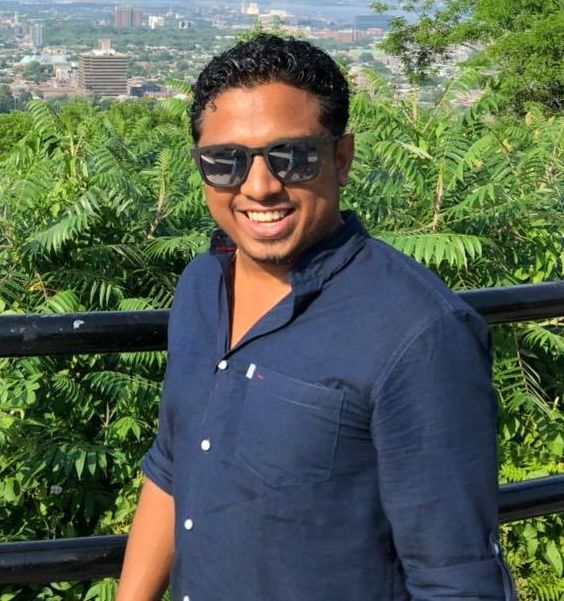
Dhanuka Dickwella is a distinguished Sri Lankan poet, author, and multifaceted professional whose work spans literature, geopolitics, and social activism. Holding a Master’s degree in International Relations, he has established himself as an expert in geopolitics and geoeconomics, fields that inform his analytical and creative endeavours.
His professional portfolio includes significant editorial and journalistic roles: he serves as the Executive Editor of The Asian Reviews magazine, a platform dedicated to bridging the literary worlds of East and West. Additionally, he contributes as a guest writer for the Chicago-based Armenian Mirror-Spectator, focusing on geopolitical issues in the Caucasus region, and as a columnist and guest speaker for Force, an Indian magazine addressing security and defense matters. Dickwella’s career in public service is equally notable. Dhanuka Dickwella is the Chief Coordinator for Canada for the Panorama International Literature Festival 2026. He has been actively involved in Sri Lankan politics, having served as a grassroots politician, political campaign director, and council member of a local government body in a rural Sri Lankan town. Prior to his political engagements, he founded and led a foundation dedicated to empowering youth and supporting underprivileged communities, reflecting his commitment to social equity. Currently, he advises youth groups on political activism and broader political trends, leveraging his extensive experience to foster the next generation of civic leaders. Beyond his analytical and political pursuits, Dickwella is a celebrated poet and blogger whose literary work explores the complexities of human emotion and experience. His debut poetry collection, Voices of Lust, Love and Other Things, showcases his ability to weave personal narrative with universal themes. An ardent climate and social activist, he champions sustainable development and social justice, driven by a vision of a better world for future generations. A proud Sri Lankan patriot, Dickwella is also a devoted father to his daughter, whose influence is a cornerstone of his personal and creative life. Dhanuka Dickwella’s diverse achievements reflect a rare synthesis of intellectual rigor, artistic expression, and civic dedication, positioning him as a prominent voice in both Sri Lankan and global contexts.
Leave a Reply