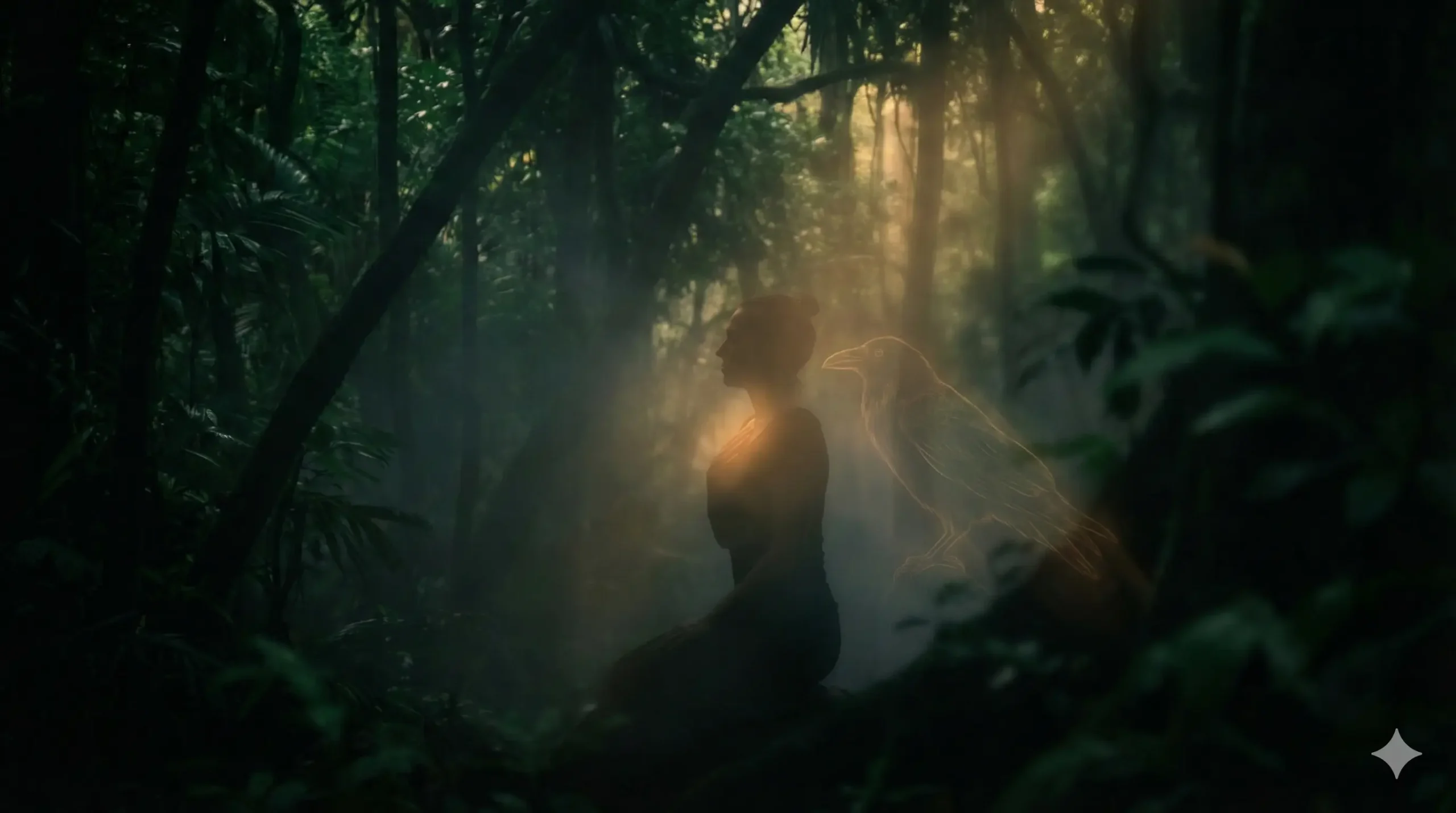
“Animals are a window to your soul and a doorway to your spiritual destiny,” comes from Kim Shotola’s book The Soul Watchers: Animals’ Quest to Awaken Humanity.
Who Are Spirit Animals?
Before we dive into the answer to who Spirit Animals are, it is important to revisit our definition of animals. Often, we see them as wild, savage, uncultured creatures, or as beings of inferior moral and intellectual capacities. Yet, they possess faculties modern humans could only dream of: scenting, seeing, and sensing things at extraordinary distances, adopting, living, and thriving in rigid, unlivable conditions that no human is capable of surviving for even a minute. They pack a far greater punch than we could imagine.
Without carrying a flag, a hashtag, a name, a nation, religion, or a social media profile, each one of them provides the perfect balance needed for an ecosystem, going further than being merely one piece in the hierarchy of a food chain. We, humans, are part of them, not distinct, but integral and eternal. We are animals after all, pure and simple. Just another nation of those that fought, rose, and finally emerged as the top dog. Now that that’s established, let’s explore our topic.
Spirit Animals are sacred, ancient figures, messengers, protectors, and guides who appear to an individual to offer wisdom, strength, or direction on their life’s journey. They represent a deep, ancestral connection between humanity and the wild. They are a window to higher, mythical, and spiritual realms.
This belief system has endured for thousands of years, long before we formed cities and barricaded ourselves away from nature. We once lived in jungles, just another animal that walked, crawled, climbed, hunted, and killed. The fact that we belong to our original home of the jungle did not change, even with the discovery of fire, which ignited a revolution. The memory of the wild is in our blood, and the Spirit Animal is the vessel of that memory.
Ancestral Roots: Shamanism and Indigenous Traditions
The concept of a spiritual animal guide is inseparable from Shamanism, one of the oldest spiritual practices on Earth. Shamans, the healers and intermediaries of their communities, traveled to the spirit world through trance states, often seeking the assistance of animal allies who happened to possess powers superior to humans in certain ways.
The First Nations of North America
The traditions of the First Nations across North America provide the most profound and influential understanding of animal guides.
- Totem Animals (The Clan): These represent a tribe or family unit, symbolizing its collective identity, strengths, and spiritual lineage.
- Power/Spirit Animals (The Individual): These appear to a person, often during a Vision Quest, to serve as lifelong protectors and teachers, lending their specific characteristics to the individual.
Familiar Spirits: It is important to distinguish these traditional concepts from the Familiar Spirit (or “Familiar”) found primarily in European witchcraft and occult traditions. The Familiar is a supernatural entity, often an animal, that serves a witch or sorcerer, sometimes acting as an imp or demon, and is generally seen as a servant of dark magic or spellcraft, rather than a teacher or protector guide.
The Wisdom of Africa
For millennia, across the African continent, the spiritual connection to animals is deeply embedded in cultural practices. Many groups practice forms of totemic kinship, where a specific, powerful animal like the Lion, Buffalo, or Elephant is revered as the ancestor and communal protector of an entire clan. Clan members are forbidden from harming their totem animal, as it serves as a social and spiritual identifier. Furthermore, in various African mythologies, animals such as the Leopard, Crocodile, or Python are often seen as temporary, physical manifestations of powerful spiritual forces, capable of shapeshifting and representing immense, ancient wisdom. Animals like the Mantis or Cobra frequently act as sacred messengers, carrying vital warnings or blessings from the ancestors and demanding immediate respect when encountered.
The Maoris of New Zealand
Similarly, the Māori of New Zealand hold deep reverence for animals, particularly birds. The concept of Kaitiaki (guardians) encompasses ancestral spirits who can take the form of animals (like certain birds, sharks, or lizards). These Kaitiaki protect sacred places and people, acting as spiritual sentinels over specific domains.
Beyond the realms of indigenous traditions, the belief in an animalistic spiritual connection formed a core pillar of human faith. Except for what’s already mentioned, throughout the ancient world—wherever human civilization existed from antiquity—one could find the concept of spirit animals, animal guides, or totemic kinship referred to and practiced in different forms. The impulse to seek wisdom in the wild is truly universal.
Spirit Animals vs. Mystical Creatures
As you noted, Spirit Animals differ from culture to culture. While many traditions rely on known species like the lion, hawk, deer, or wolf, others incorporate mythical beings.
The difference often lies in the purpose: the lion or wolf offers inherent, natural characteristics, while the more ancient, mystical creatures from traditions like the Nordic cultures often symbolize a cosmic or primordial force.
- Known Species: Lion (courage), Fox (cunning), Owl (wisdom). These relate to an individual’s character traits.
- Mythical/Primordial Creatures (Norse/Slavic Leads): These often represent a relationship to the gods or the universe itself (e.g., the Midgard Serpent or the Phoenix), and we will explore these in Part II.
The Subtle Appearance: Signs in Your Life
Your spirit animals really do show up in your life if you care to pay attention. They may be soaring up in the sky, observing and guarding you, walking beside you, appearing while you are on a safari, a visit to a region, or they might just come in the form of dreams.
Perhaps we already carry certain similarities or characteristics of animals: one might be cunning like a fox, intelligent like an owl, sharp like an eagle, or brave like a lion.
However, there is a more nuanced way they manifest. The appearance of a guide is always intentional and requires the seeker to interpret the timing and context: A butterfly or many of them when you are going through a transition.
An elephant, when you want to strengthen family ties or cultivate loyalty. A snake, when you are ready for significant personal growth, a spiritual awakening, or perhaps to encourage you to trust your gut feelings and inner knowing.
Common Spirit Animals and Their Mystical Medicine
Let’s look at some very commonly spoken spirit animals and what they resemble, as well as what their appearance signifies in our life.
Let’s look at some very commonly spoken spirit animals and what they resemble, as well as the potent mystical medicine their appearance signifies in our life.
The Hawk: Known for its sharp vision, awareness, and role as a messenger. When the Hawk appears, it is a sign that you need to observe the bigger picture; a message or omen is near, and you are called to use your keen intellect to receive it.
The Elephant: Embodies wisdom, strength, loyalty, and deep memory. Its presence signifies a need for patience and deep connection to your family or community, guiding you to lead with gentle strength and profound wisdom.
The Wolf: Represents intelligence, loyalty, intuition, and freedom. A Wolf’s call is an urgent plea to trust your inner voice and find the sacred balance between your need for fierce independence and your loyalty to the community.
The Deer: Characterized by gentleness, speed, instinct, and innocence. This guide teaches you the lesson of moving through life gently; be alert and follow your instinct, but without being fearful, trusting fully in your soft heart.
The Snake: The ultimate symbol of transformation, healing, rebirth, and life force. Its appearance is a sign of major change or transition; you are being asked to shed the past, embrace renewal, and reconnect with your primal energy.
The Raven: A guide of mystery, magic, co-creation, and a messenger of deep secrets. When the Raven calls, you are being asked to explore the mysteries of the unseen world and recognize that you are entering a time of powerful inner magic.
Your Journey Continues
We have journeyed through the ancient philosophies of animal guides, from the Vision Quests of the First Nations to the totemic kinship of Africa. Yet, the story of the animal spirit is far from complete. What of the cosmic creatures revered by the Vikings and the shamans of Siberia? And more importantly: How do you move past interpretation and into direct, mystical discovery?
In Part II, we will cross continents to uncover the wisdom of Norse, Slavic, and Asian animal deities, and explore the crucial modern traditions, from meditation to deck cards, that can finally reveal the identity of your own personal spirit guide. Click here to continue your mystical journey.

Dhanuka Dickwella is a distinguished Sri Lankan poet, author, and multifaceted professional whose work spans literature, geopolitics, and social activism. Holding a Master’s degree in International Relations, he has established himself as an expert in geopolitics and geoeconomics, fields that inform his analytical and creative endeavours.
His professional portfolio includes significant editorial and journalistic roles: he serves as the Executive Editor of The Asian Reviews magazine, a platform dedicated to bridging the literary worlds of East and West. Additionally, he contributes as a guest writer for the Chicago-based Armenian Mirror-Spectator, focusing on geopolitical issues in the Caucasus region, and as a columnist and guest speaker for Force, an Indian magazine addressing security and defense matters. Dickwella’s career in public service is equally notable. Dhanuka Dickwella is the Chief Coordinator for Canada for the Panorama International Literature Festival 2026. He has been actively involved in Sri Lankan politics, having served as a grassroots politician, political campaign director, and council member of a local government body in a rural Sri Lankan town. Prior to his political engagements, he founded and led a foundation dedicated to empowering youth and supporting underprivileged communities, reflecting his commitment to social equity. Currently, he advises youth groups on political activism and broader political trends, leveraging his extensive experience to foster the next generation of civic leaders. Beyond his analytical and political pursuits, Dickwella is a celebrated poet and blogger whose literary work explores the complexities of human emotion and experience. His debut poetry collection, Voices of Lust, Love and Other Things, showcases his ability to weave personal narrative with universal themes. An ardent climate and social activist, he champions sustainable development and social justice, driven by a vision of a better world for future generations. A proud Sri Lankan patriot, Dickwella is also a devoted father to his daughter, whose influence is a cornerstone of his personal and creative life. Dhanuka Dickwella’s diverse achievements reflect a rare synthesis of intellectual rigor, artistic expression, and civic dedication, positioning him as a prominent voice in both Sri Lankan and global contexts.
Leave a Reply