
Giovanni Boccaccio, in his The Decameron, writes:
“Now it so befell that after a hard day’s work he was taking a little rest, when two young nuns, who were walking in the garden, approached the spot where he lay, and stopped to look at him, while he pretended to be asleep… And then she led him into the hut, where he needed no pressing to do what she desired of him. Which done, she changed places with the other, as loyal comradeship required; and Masetto, still keeping up the pretence of simplicity, did their pleasure.”
If these words spark curiosity, then keep reading. But first, we must acknowledge the Erogenous Zones. Typically, we define these as physical regions: the neck, ears, mouth, or subtle areas like the inner thighs. Yet, there is one more: a non-physical zone that is more powerful, subtle, and often disregarded, the mind. The mind is the source of sexual response, arousal, fantasy, and pleasure, making it the undeniable center of gravity for desire.
We speak of lips, of hips, of the curve where thigh meets heat. But the most intoxicating seduction doesn’t begin in the body, at least not for everyone. For some, it begins in the mind, where a single sentence can unravel weeks of composure, and a well-placed pause can ignite more hunger than a thousand touches. This is not to suggest arousal is sans mind for the rest; there is no such thing as mindless arousal.
True eroticism is not a spectacle. It is a subtext. It’s the way someone writes your name, not with flourish, but with focus, as if each letter carries weight. It’s the silence after you say something vulnerable, held not in awkwardness, but in reverence. It’s the way one remembers the book you mentioned in passing, and weeks later, sends a line from page 37 with one word underlined: “This is you.”
In a world that reduces intimacy to filters, positions, and performance, the mind remains the last uncolonized frontier of desire. A clever metaphor can make your pulse quicken. A shared philosophical doubt can feel like foreplay. A voice that speaks in rhythm with your thoughts? That is the quiet thunder before the storm.
You may have very well been in this moment:
Laying awake, not because of a lover’s hands, but because of their words. The person moved through you like slow fire, mapping parts of you you’d forgotten existed. Did the person touch your skin that night? No, and yet, you felt branded.
This is the secret of Sacred Flesh. The body responds to what the mind surrenders to. When you are spoken to like a mystery, not a conquest, the soul opens. When curiosity replaces agenda, intimacy becomes ritual. You don’t just have the other, you witness them. And in that witnessing, you ignite something far more potent than lust: recognition. But lust is not lost.
This seduction of intelligence, to be known, not just desired, has a name: sapiosexual. It was coined in 1998 by the American engineer and blogger Darren Stalder. When Stalder created the term, he never intended it to be used exclusively by one class or as a measure of exclusivity. Sadly though, this is exactly what has transpired. Today, “sapiosexual” is an elitist glossary. The moment you use the word, you distinguish yourself from the rest, assuming a kind of superiority. What an insult to humanity’s freedom of being who they are.
Let’s break this intellectual façade. Everyone is sapiosexual. The only difference is the degree to which one feels aroused or intimate due to intellectual exchange. Sapiosexuality does not show one is better read or more cultured than the rest. One is only more sensitive to witty banter and words than the rest. Simply having a mind more sensitive than one’s inner thighs does not grant access to an exclusive club.
Pleasure is universal, and so is its glossary of words. Sapiosexuality is not a hashtag, a brand, or a pass to a different realm. It is a gift available to the entirety of humanity.
Dhanuka
Pleasure as sovereignty. Thought as foreplay. Presence as the ultimate kink. — Sacred Flesh
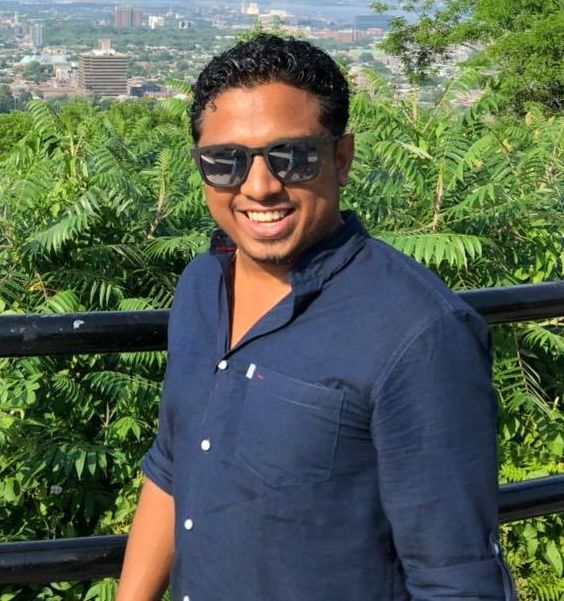
Dhanuka Dickwella is a distinguished Sri Lankan poet, author, and multifaceted professional whose work spans literature, geopolitics, and social activism. Holding a Master’s degree in International Relations, he has established himself as an expert in geopolitics and geoeconomics, fields that inform his analytical and creative endeavours.
His professional portfolio includes significant editorial and journalistic roles: he serves as the Executive Editor of The Asian Reviews magazine, a platform dedicated to bridging the literary worlds of East and West. Additionally, he contributes as a guest writer for the Chicago-based Armenian Mirror-Spectator, focusing on geopolitical issues in the Caucasus region, and as a columnist and guest speaker for Force, an Indian magazine addressing security and defense matters. Dickwella’s career in public service is equally notable. Dhanuka Dickwella is the Chief Coordinator for Canada for the Panorama International Literature Festival 2026. He has been actively involved in Sri Lankan politics, having served as a grassroots politician, political campaign director, and council member of a local government body in a rural Sri Lankan town. Prior to his political engagements, he founded and led a foundation dedicated to empowering youth and supporting underprivileged communities, reflecting his commitment to social equity. Currently, he advises youth groups on political activism and broader political trends, leveraging his extensive experience to foster the next generation of civic leaders. Beyond his analytical and political pursuits, Dickwella is a celebrated poet and blogger whose literary work explores the complexities of human emotion and experience. His debut poetry collection, Voices of Lust, Love and Other Things, showcases his ability to weave personal narrative with universal themes. An ardent climate and social activist, he champions sustainable development and social justice, driven by a vision of a better world for future generations. A proud Sri Lankan patriot, Dickwella is also a devoted father to his daughter, whose influence is a cornerstone of his personal and creative life. Dhanuka Dickwella’s diverse achievements reflect a rare synthesis of intellectual rigor, artistic expression, and civic dedication, positioning him as a prominent voice in both Sri Lankan and global contexts.
Leave a Reply