“A man is known by the company he keeps.”
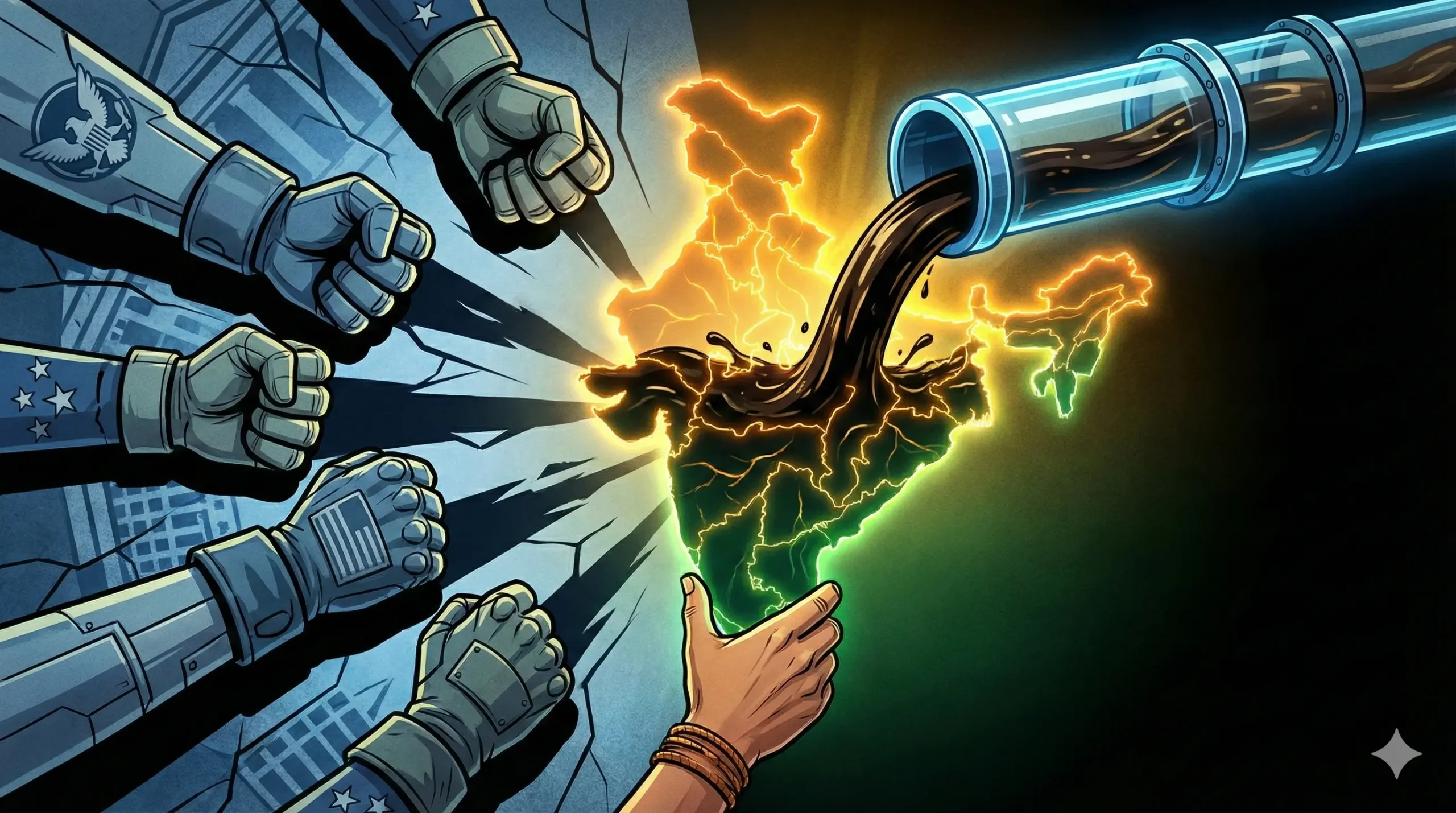
This ancient wisdom, articulated by Aesop to teach moral judgment, has been corrupted by the modern West. It has been transformed into a political whip. “Guilt by Association.” Today, in the pursuit of geopolitical agendas, this argument is deployed not as a moral lesson, but as the primary means to enforce international sanctions against nations that dare to assert their sovereign economic choice.
In the aftermath of Russia’s invasion of Ukraine, the West launched an unprecedented economic war against the Russian federation. In its tools of economic coercion the entire mix of methods from blacklisting, blockades, sanctions, embargoes, to boycotts were used. Among those methods, ‘’sanctions ‘’ of unheard levels were promoted, enforced as a silver bullet that will bring the Kremlin to its knees. When the sanctions backfired and failed, the west went after secondary targets. Not just against Moscow, but against any nation that refused to fall in line. Among the most vocal targets? India, a democracy of 1.4 billion people, a Quad partner, and a long-standing U.S. ally in the Indo-Pacific. Why? Because India continued to buy discounted Russian oil.
The accusation? “Guilt by association.” The implication? By engaging in energy trade with a sanctioned state, India is complicit in aggression. Is it though ? This framing is not just flawed and hollow, it’s hypocritical, imperial, and dangerously selective. It ignores history, economics, and above all, the sovereign right of nations to prioritize their people over geopolitical theater.
A Legacy of Strategic Autonomy: India’s Cold War Defiance
Modi’s India did not suddenly discover independence in 2022. Its commitment to strategic autonomy is woven into the fabric of its anti colonial, strictly sovereign foreign policy since independence in 1947. Even at the height of the Cold War, when the world was split into rigid ideological camps, India refused to be a pawn nor be a part of it. Rather charted its own path leading the non-aligned movement, taking the global south which was then called the third world countries under its wings.
In 1971, as Pakistan launched a genocidal campaign in East Bengal, India faced immense pressure from the United States. President Nixon and Henry Kissinger openly backed Pakistan, even dispatching the nuclear-powered aircraft carrier USS Enterprise to the Bay of Bengal as a show of force. Yet India did not back down. At that time, India lacked both the nuclear status and the sophisticated military power it commands today. With its head high, instead of balking to pressure, it signed the Indo-Soviet Treaty of Peace, Friendship and Cooperation, a bold act of realpolitik that ensured military and diplomatic cover during the Bangladesh Liberation War. The result? The birth of a new nation, a defeated Pakistan and its supporters, the liberation of millions, and a decisive Indian victory.
That moment cemented a principle: India’s alliances are transactional, not ideological. They serve national interest, not the moral dictates of distant capitals. Fast forward to today, and that same principle guides New Delhi’s energy calculus. To accuse India of “betraying” the rules-based order is to erase its entire post-colonial identity.
Energy Security Is National Security
India imports over 85% of its oil. With inflation threatening economic stability and a vast population dependent on affordable fuel, energy security is not a luxury but it is existential.
When Western sanctions sent global oil prices soaring in 2022, Russia offered a lifeline. Urals crude at a 20–30% discount. India, seizing the opportunity, increased its Russian oil imports which used to be very marginal to a staggering 40% by 2023–2024. Critics cry foul. But consider the alternatives.
The Middle Eastern suppliers lack spare capacity to meet India’s scale while U.S. shale is expensive and logistically complex. The African and Latin American sources are unreliable.
In this context, refusing Russian oil would mean higher fuel prices, wider trade deficits, and slower growth. Needless to say, that’s a luxury India cannot afford.
Prime Minister Narendra Modi’s government has been clear: “Our first responsibility is to the Indian people.” That includes keeping the lights on, buses running, and kitchens cooking and business flourishing. No amount of Western moralizing will override that duty. Energy security is not merely a pillar of national security in this century; it is the primordial, non-negotiable national interest of every sovereign state.
The West’s Glaring Hypocrisy
Herein lies the crux of the double standard. While condemning India, the West continued its own energy trade with Russia, of course often through opaque channels. In 2022 alone, the European Union imported €64 billion worth of Russian fossil fuels, even after announcing sanctions. Germany, Italy, and Hungary resisted full embargoes for months. Meanwhile, U.S. companies, via intermediaries in the UAE, Turkey, and China, kept buying Russian oil, LNG, and even uranium. Swiss traders allegedly facilitated oil-for-gold swaps. Even Shell and BP admitted to purchasing Russian crude well into 2022.
Yet none of these actors faced the “guilt by association” label. Why? Because they are part of the Western club, their transgressions are excused as “pragmatism,” while Global South nations are branded as “complicit.” The real issue isn’t compliance. It’s control. The West seeks to enforce a unipolar economic order where only it decides who trades with whom all the while forgetting how fiercely sovereign India has been, is and will be.
Modi’s India: Sovereign, Calculated, Unapologetic
Under Prime Minister Modi, India has mastered the art of multi-alignment. The depth and the width of its presence across every important global club simultaneously is self explanatory.
Delhi is a member of the Quad (with the U.S., Japan, Australia), a leading participant in BRICS + (with Russia, China, Brazil, South Africa, +), an active member of Shanghai Cooperation Organization (SCO) where the entirety of Eurasia meets. India buys Russian oil while American defense systems are being sold to it. A host of the G20 and a prominent voice for the Global South. This is not a contradiction rather a strategic sophistication.
During India’s G20 presidency in 2023, New Delhi refused to issue a joint statement condemning Russia, instead pushing consensus on development, climate, and digital public infrastructure. The message was clear: India will not let one conflict dominate the global agenda nor will it allow external players to decide for it.
Moreover, the Russia-Ukraine war has allowed India to, expand rupee-based trade mechanisms, reducing dollar dependence. Strengthen logistical ties with Russia via the International North-South Transport Corridor. Position itself as a neutral mediator, a role increasingly valued by the non-aligned world. Far from being isolated for her actions and engagements, India is gaining diplomatic capital precisely because it refuses to be bullied.
“Guilt by Association” Is a Tool of Hegemony
The phrase “guilt by association” has no basis in international law. It is a moralistic weapon used to punish nations that assert independence.If applied consistently, Germany, Italy, China, Turkey, UAE, and even U.S. corporations would all be “guilty.” But the West applies it selectively, targeting Global South states that challenge its economic dominance.
This is not about Ukraine. It’s about who gets to define sovereignty. India’s stance is simple: We will engage with any nation that serves our national interest, so long as we do not violate international law. Buying oil is not an act of war but a mere act of survival.
To demand that India sacrifice its economic stability for the sake of Western unity is not just unfair, it is neo-colonial. It assumes that the Global South exists to validate Western moral frameworks which it has long lost, not to chart its own course.
Sovereignty Is Non-Negotiable
Modi’s India will not be shamed into energy poverty by powers that filled their own tanks while preaching sacrifice to others. A real moral sham rooted in the modern west. In the calculus of survival, sovereignty is non-negotiable. An inch ceded, will cost a mile in this time and age.
The days of unipolar world order are a thing in that past. The era of unquestioned Western moral authority is over. Nations like India, Brazil, South Africa, and Indonesia are asserting their right to strategic autonomy, not out of defiance, but out of responsibility to their people and rightly so.
As the West doubles down on sanctions and shaming, it risks alienating the very partners it needs to build a truly inclusive global order. In lieu of building bridges, the west is skillfully widening the gulf between them and the global south. Who can blame them for scoring their own goal. India, for its part, will continue to walk its own path, neither with Russia, nor against the West, but always for India. And in doing so, it offers a powerful lesson: True sovereignty isn’t about taking sides. It’s about refusing to be forced into them.
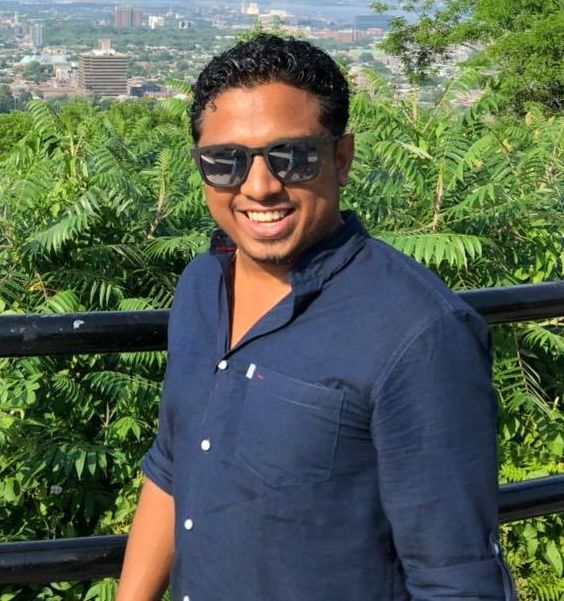
Dhanuka Dickwella is a distinguished Sri Lankan poet, author, and multifaceted professional whose work spans literature, geopolitics, and social activism. Holding a Master’s degree in International Relations, he has established himself as an expert in geopolitics and geoeconomics, fields that inform his analytical and creative endeavours.
His professional portfolio includes significant editorial and journalistic roles: he serves as the Executive Editor of The Asian Reviews magazine, a platform dedicated to bridging the literary worlds of East and West. Additionally, he contributes as a guest writer for the Chicago-based Armenian Mirror-Spectator, focusing on geopolitical issues in the Caucasus region, and as a columnist and guest speaker for Force, an Indian magazine addressing security and defense matters. Dickwella’s career in public service is equally notable. Dhanuka Dickwella is the Chief Coordinator for Canada for the Panorama International Literature Festival 2026. He has been actively involved in Sri Lankan politics, having served as a grassroots politician, political campaign director, and council member of a local government body in a rural Sri Lankan town. Prior to his political engagements, he founded and led a foundation dedicated to empowering youth and supporting underprivileged communities, reflecting his commitment to social equity. Currently, he advises youth groups on political activism and broader political trends, leveraging his extensive experience to foster the next generation of civic leaders. Beyond his analytical and political pursuits, Dickwella is a celebrated poet and blogger whose literary work explores the complexities of human emotion and experience. His debut poetry collection, Voices of Lust, Love and Other Things, showcases his ability to weave personal narrative with universal themes. An ardent climate and social activist, he champions sustainable development and social justice, driven by a vision of a better world for future generations. A proud Sri Lankan patriot, Dickwella is also a devoted father to his daughter, whose influence is a cornerstone of his personal and creative life. Dhanuka Dickwella’s diverse achievements reflect a rare synthesis of intellectual rigor, artistic expression, and civic dedication, positioning him as a prominent voice in both Sri Lankan and global contexts.
Leave a Reply