“Wolves don’t lose sleep over the opinions of sheep.”
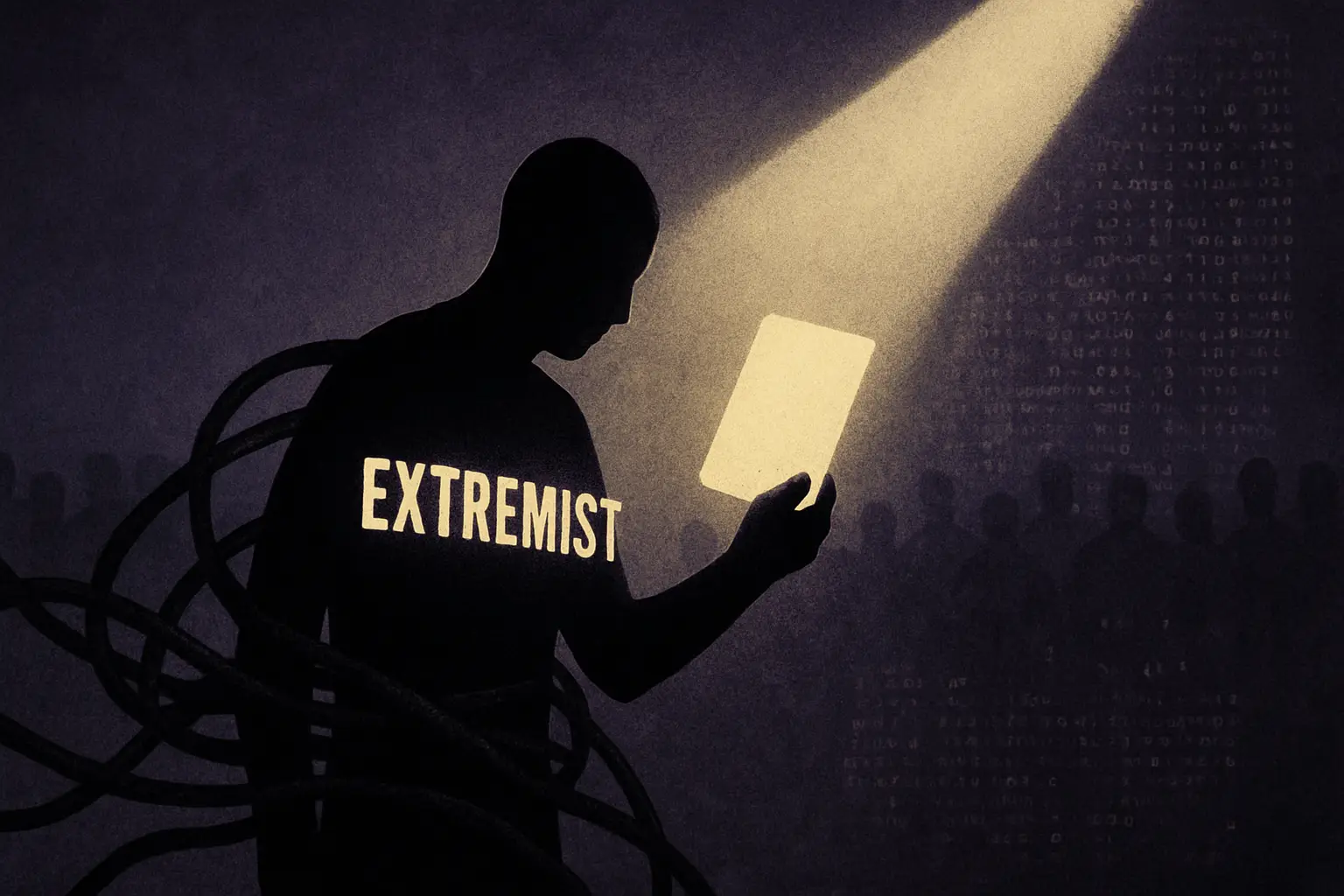
This biblical proverb holds true in the brutal landscape of modern political thought. There are tens of ways to interpret the same. In the context of an independent thinker, a creator of sovereign thought, it underlines the necessity of being immune to the shallow critiques and herd behavior of the status quo. Yet, if the opinions of the masses are so irrelevant, why does every established power structure dedicate so much effort, resource and attention to manufacturing those opinions? Why do they invest billions in branding the messenger as a “conspiracy theorist” or an “extremist”?
The truth is that authority does lose sleep, not over the sheep’s opinions of course, but over the possibility that the wolf might be right. Because…
ideas are the most dangerous and powerful force on Earth. A single concept, perfectly articulated, can be way more impactful than a thousand armies. It can ignite a rebellion, cause social unrest, change the tide of global trends, or bring an oppressive government to its knees. It can force the world to adopt reforms, spur improvements, give rise to a just world, or even incite a war.
This is precisely why, throughout history, authority has been inherently cautious, skeptical, and deeply suspicious of new ideas and those who dare to create them.
In an age of curated, crafted narratives and information warfare, this ancient fear has transmuted into a modern, deceitful strategy of stigmatization of independent opinions. In this century, it is no longer just “killing the messenger” with a sword but suffocating them with silence, drowning them in ridicule, or discrediting them with labels, long before their ideas can ever truly take root.
The Threat of Unsanctioned Insight
For any established power structure, be it a government, a religious establishment, a dominant ideology, or a corporate monopoly, the independent thinker is a potential yet obvious threat. The official narrative, however flawed, outdated, divisive, provides stability. On the other hand,a truly original, well-articulated idea, especially one that exposes inconvenient truths or offers radical solutions, can shatter that stability.
One of the core tasks of any state’s intelligence apparatus is not merely to monitor rival nations or terrorist cells, but to monitor thought itself. Spy agencies track such trends, people, and individuals precisely so that state structures are aware and have lead time to prepare for any potential “showdown.” This can range from countering a rival political philosophy to suppressing dissent that threatens the status quo.
But like decades ago, there is no need to threaten, kidnap, torture, intimidate, or engage in extrajudicial assassinations any longer. Instead of any such overt actions that cause reputational damage to authorities, there is a whole ecosystem of modern information and technology that has been weaponized in subtle ways. The same act of killing the messenger is done with plausible deniability.
Modern Censorship: The Silencing Toolkit
Today, the “killing” of the messenger rarely involves overt violence in the West. It’s far more sophisticated, leveraging social dynamics and digital platforms. In the East, both methods are in practice depending on how empowered the civil society really is in the respective country. The silencing has four interconnected steps that finally culminates into a cohesive, effective state of the art playbook.
The first step is the ‘’Labeling Trap’’. The most common tactic is to attach a dismissive label. If an idea challenges a mainstream view, the messenger is quickly branded as “conspiracy theorist,” “extremist,” “unpatriotic,” “misinformed,” ‘’ a pro that or pro this’’ ‘’ funded by so and so ‘’ or worse. This isn’t about refuting the idea. It’s about making it impossible for the idea to be heard by discrediting its source.
Then comes the ‘’Echo Chamber Effect’’. Algorithmic bias and social media’s natural tendency to form echo chambers mean that independent opinions, especially those that cross ideological lines, struggle to gain traction. They are simply not shown to a broad audience, effectively stifling their reach. How very convenient.
Then there is an economic aspect. The ‘’Cancel Culture and Professional Exclusion’’. For those whose livelihoods depend on professional reputation, the threat of “cancellation” for an unpopular opinion is a powerful deterrent that could result in conferences retracting invitations, publishers delaying contracts, and media appearances vanishing. The individual isn’t physically harmed, but their ability to disseminate ideas, and earn a living from it to sustain, is severely crippled or totally destroyed.
The fourth and most common is the ‘’Information Overload’’. Sometimes, the best way to silence a clear, independent voice is to bury it under an avalanche of noise. In an era of infinite content, a nuanced, well-researched opinion can be drowned out by sensationalism and emotionally charged, but ultimately superficial, narratives. It works like a magic all the time.
The Geopolitical Context: Why Sovereign Minds Matter More Than Ever
In the current geopolitical landscape, where information warfare is as potent or even superior as conventional warfare, the independent analyst is both a target and a necessity. Governments and state-backed media constantly battle to control narratives around conflicts, economic shifts, and international alliances. An analyst, an independent thinker, a freelance opinion creator who offers uncommon analysis, who dares to look beyond the presented binaries and explain the true, complex forces at play is inherently disruptive.
They might expose inconvenient truths about a favored ally. They might predict an outcome that undermines official policy. They might reveal the hidden agendas behind a seemingly benevolent action.
For this reason, those who offer genuine independent opinion are often met with disproportionate skepticism or outright hostility. The goal is not to prove them wrong, but to prevent their ideas from gaining a critical mass.
The Imperative of Sovereign Thought
The stigmatization of independent opinion isn’t an inherent bug in the system as it seems. It’s often a feature designed to maintain control. Yet, the health of any society, and indeed the future of global stability, depends on the free flow of diverse, unadulterated ideas.
If we cease to tolerate, let alone encourage those who dare to think differently, we condemn ourselves to repeat the mistakes of the past. We hand over our collective future to unchallenged narratives, however self-serving.
To foster a just world, to adapt to new challenges, and to truly evolve, we must actively seek out the messengers, especially those whose insights challenge our comfortable assumptions. We must differentiate between genuine analysis and malicious disinformation, but the immediate impulse to “shoot” the messenger, with labels, ridicule, or silence, must be resisted.
Sovereign Minds calls for the courage not just to think independently, but to listen independently. The future of global reform, improvement, and justice may well depend on our willingness to hear the ideas that authority finds most uncomfortable.

Dhanuka Dickwella is a distinguished Sri Lankan poet, author, and multifaceted professional whose work spans literature, geopolitics, and social activism. Holding a Master’s degree in International Relations, he has established himself as an expert in geopolitics and geoeconomics, fields that inform his analytical and creative endeavours.
His professional portfolio includes significant editorial and journalistic roles: he serves as the Executive Editor of The Asian Reviews magazine, a platform dedicated to bridging the literary worlds of East and West. Additionally, he contributes as a guest writer for the Chicago-based Armenian Mirror-Spectator, focusing on geopolitical issues in the Caucasus region, and as a columnist and guest speaker for Force, an Indian magazine addressing security and defense matters. Dickwella’s career in public service is equally notable. Dhanuka Dickwella is the Chief Coordinator for Canada for the Panorama International Literature Festival 2026. He has been actively involved in Sri Lankan politics, having served as a grassroots politician, political campaign director, and council member of a local government body in a rural Sri Lankan town. Prior to his political engagements, he founded and led a foundation dedicated to empowering youth and supporting underprivileged communities, reflecting his commitment to social equity. Currently, he advises youth groups on political activism and broader political trends, leveraging his extensive experience to foster the next generation of civic leaders. Beyond his analytical and political pursuits, Dickwella is a celebrated poet and blogger whose literary work explores the complexities of human emotion and experience. His debut poetry collection, Voices of Lust, Love and Other Things, showcases his ability to weave personal narrative with universal themes. An ardent climate and social activist, he champions sustainable development and social justice, driven by a vision of a better world for future generations. A proud Sri Lankan patriot, Dickwella is also a devoted father to his daughter, whose influence is a cornerstone of his personal and creative life. Dhanuka Dickwella’s diverse achievements reflect a rare synthesis of intellectual rigor, artistic expression, and civic dedication, positioning him as a prominent voice in both Sri Lankan and global contexts.
Leave a Reply